
There is a sentence in the first version of this article about frankincense and myrrh helping to cure cancer. It should never have gone up, and taking it down is the whole reason I have rewritten the piece rather than tidied it.
In Short
- These oils come from where the trees grow, not from a business decision about pollution or cheap land
- Laboratory and animal studies on boswellic acids exist; human clinical evidence for treating disease does not
- Distillation was refined in the Persian and Arabic-speaking world and carried to Europe by returning crusaders, not the other way round
- The EU’s fragrance allergen list went from 26 substances to more than 80 for products placed on the market from 31 July 2026; Great Britain still uses the list of 26
Where these oils really come from
Frankincense is the dried resin of Boswellia trees; myrrh comes from Commiphora. Both are scrubby, drought-tolerant trees that grow in Somalia, Ethiopia, Eritrea, Oman, Yemen and parts of India, and they are tapped by hand: a cut in the bark, a wait of a few weeks, then the hardened resin is collected.
The original article explained the concentration of distilleries in the Near and Middle East as investors fleeing a polluted northern hemisphere for richer southern soil. That is not what is happening. The extraction sits where it does because the trees only grow there, in a narrow band of arid country, and hauling raw resin thousands of miles before distilling it makes no commercial sense. Both regions named are in the northern hemisphere, incidentally.
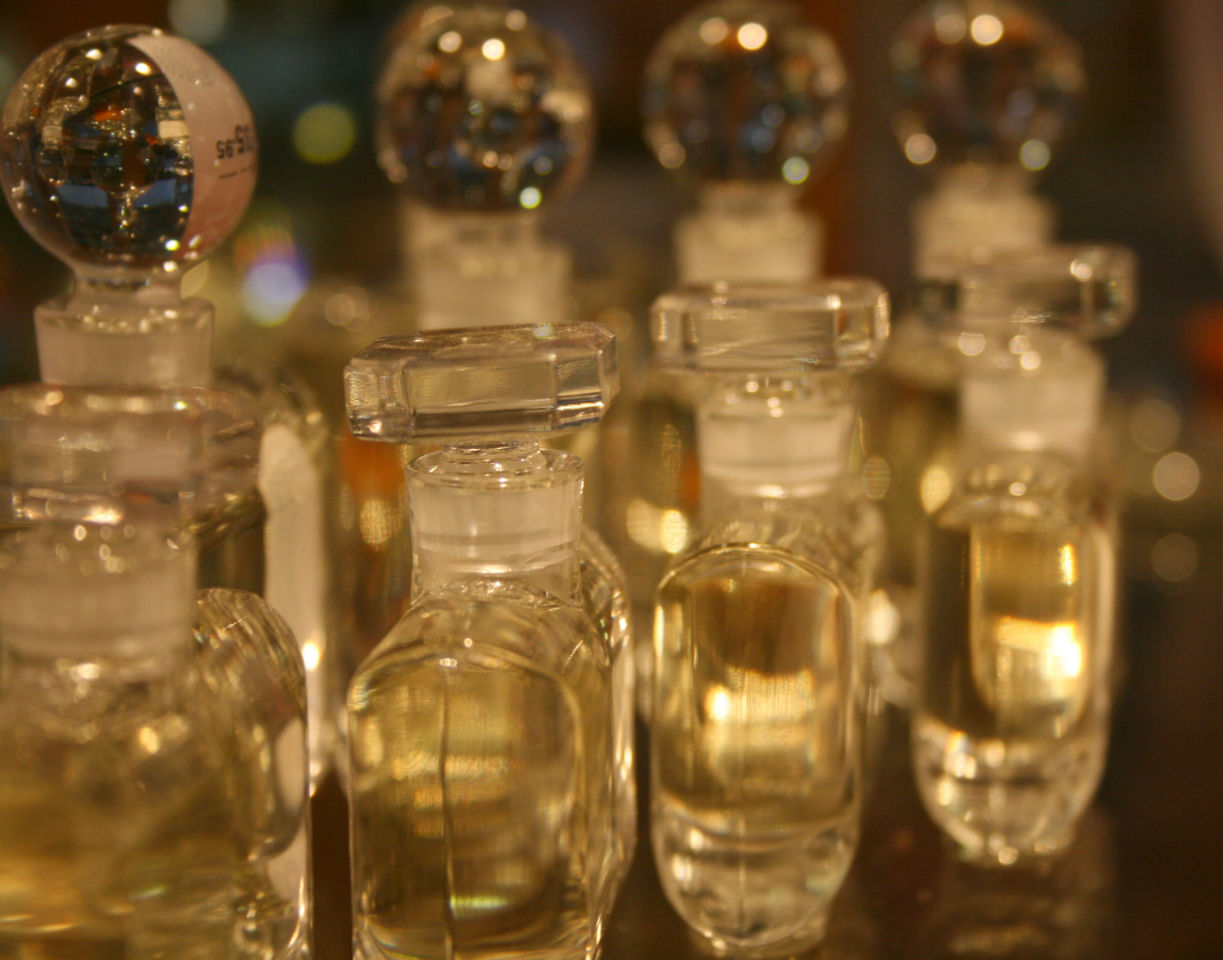
Essential oils are used for perfume industry
The claim I am not repeating
The line I inherited said frankincense and myrrh are “reputed to help curing cancer” through anti-inflammatory action, immune stimulation, antiviral activity and a sedative effect. Reputed by whom is doing a lot of work in that sentence.
Cancer Research UK states that there is no scientific evidence that aromatherapy can cure or prevent cancer. The research that does exist looks at whether it helps with symptoms and quality of life rather than the disease itself, and even there the picture is modest: a 2016 Cochrane review of 19 studies concluded there was not enough evidence to say aromatherapy massage relieves symptoms in people with cancer. Some individual studies suggest a reduction in anxiety or stress, and the results are inconsistent.
I am a makeup artist, not a clinician, and that is precisely why a claim like the original one has no business on a beauty blog. It is the kind of sentence that gets copied from site to site until somebody delays a real appointment over it.
What has genuinely been studied
Boswellic acids, the compounds in frankincense resin most often written about, have been tested against cancer cell lines in the laboratory and in animal models, including work on pancreatic and breast cancer cells. Those studies are real. What they are not is evidence of a treatment.
Two distinctions matter when you read about them. First, the essential oil and the resin extract are not the same product, and most of the interesting laboratory work uses extracts rather than the oil sold in a 10ml bottle. Second, an effect on cells in a dish is the beginning of a research pathway, not the end of one; the overwhelming majority of compounds that kill cancer cells in vitro never become medicines.
The history, pointing the right way
The original article said the crusaders brought distillation techniques back from the West. It was the other way round. Europeans encountered these methods in the eastern Mediterranean and the Levant and carried them home.
The longer version: aromatic plants were burned, infused into fats and pressed for thousands of years, in Egypt, in Ayurvedic practice and elsewhere, but those preparations are infused oils and resins rather than distilled essential oils in the modern sense. The refinement of steam distillation is usually credited to the Persian physician Ibn Sina, known in Europe as Avicenna, whose Canon of Medicine dates from the eleventh century and who is associated with the distillation of rose. Historians differ on how much of that improvement was really his rather than accumulated practice around him, so “credited with” is the honest phrasing.
The supply problem the industry does not advertise
Frankincense harvesting is under pressure, and it came up at the twentieth CITES Conference of the Parties in Samarkand, which ran from 24 November to 5 December 2025. Rather than adding Boswellia to Appendix II, which would have restricted international trade, the meeting adopted a set of recommendations, on the basis that the data on most species is not yet good enough to justify a listing. One species, Boswellia ovalifoliolata, a narrow endemic in India, was identified as meeting the criteria because of overharvesting.
Which is worth knowing when a bottle is marketed on the romance of ancient trade routes. The trees are slow, the tapping is hard on them, and demand from the wellness market has grown a great deal faster than the supply.
Safety, because “natural” is not a legal claim
Neither “natural” nor “organic” has a fixed legal definition in UK or EU cosmetics law, as the CTPA and the Advertising Standards Authority both point out. A certification such as COSMOS means something specific; the word on the front of a bottle does not.
The rules that do bite, and the ones I work to:
- Never ingest an essential oil, and never apply one internally. This is explicit in Cancer Research UK’s own guidance and it applies to everybody, not only to people in treatment.
- Dilute before skin contact. Neat oil on skin is how sensitisation starts, and once you are sensitised to a material you are sensitised for good.
- Watch the citrus oils in daylight. Cold-pressed citrus contains furocoumarins such as bergapten, which are phototoxic; the IFRA standard caps bergapten at 15 parts per million in products used on skin exposed to sunlight.
- Check the allergen labelling. Regulation (EU) 2023/1545 expanded the list of fragrance allergens that must be declared from 26 substances to more than 80, applying to products placed on the EU market from 31 July 2026, with a sell-through period to 2028. Great Britain has not adopted the expanded list and still works to the 26.
- Take pregnancy, breastfeeding and existing conditions seriously. Cancer Research UK advises avoiding aromatherapy oils if you are pregnant or breastfeeding, or if you have epilepsy, asthma, or kidney or liver problems, and notes that some oils may affect hormone levels, which matters for hormone-dependent cancers.
Where the evidence actually sits
| Claim you will see | Evidence status |
|---|---|
| Cures or prevents cancer | No evidence. Cancer Research UK says so plainly |
| Anti-inflammatory activity of boswellic acids | Laboratory and animal work exists; not established as a treatment in people |
| Relieves anxiety or stress | Mixed. Some studies positive, a 2016 Cochrane review found the evidence insufficient |
| Fragrance and cosmetic use | Well established, and the only claim I would make for these two resins |
None of which makes them worthless. Frankincense in a facial oil smells extraordinary, ages well in a blend and behaves predictably on most skins at sensible dilution, which is exactly what perfumery has wanted from it for three thousand years. If you want the practical side, dilution rates and which oils earn a place in a routine, that is all in the guide to using essential oils on skin and hair without wrecking either.
First published September 2014. Fully rewritten and fact-checked on 14 August 2026. This article is general information, not medical advice. Never use an essential oil in place of treatment prescribed to you, and speak to your GP or oncology team before using aromatherapy alongside any medical care.
Sources: Cancer Research UK, aromatherapy and essential oils, including its citation of a 2016 Cochrane review of 19 studies; CITES CoP20 outcome on Boswellia spp., Samarkand, November to December 2025; Regulation (EU) 2023/1545 on fragrance allergen labelling; IFRA standard on furocoumarins in cold-pressed citrus oils; CTPA and ASA guidance on “natural” and “organic” cosmetic claims.
Have you ever been sold an oil on a health claim?
I would genuinely like to know what wording is doing the rounds at the moment, because it changes every couple of years. Comments are open.
Read next: what “organic” is actually worth on a skincare label