
WRAP, the UK waste and resources charity, surveyed British wardrobes and found the average adult owns around 118 items of clothing, of which roughly 31 have not been worn in at least a year. Nationally that adds up to about 1.6 billion unworn garments. I read that and recognised my own spare room. The interesting bit is not the waste. It is that owning 118 things and wearing fifteen of them is a recipe for feeling badly dressed every single morning.
In Short
- WRAP’s survey: about 118 garments per UK adult, roughly 31 unworn for a year or more
- The confidence effect comes from certainty and fit, not from a low item count
- The famous lab coat study on clothing and cognition failed a direct replication, so treat that argument gently
- Test it reversibly: box things up for three months rather than donating in one emotional afternoon
What is actually happening when a smaller wardrobe feels better
Ask anyone who has done it and you get the same sentence: I stopped standing in front of the wardrobe. That is the whole mechanism, and it is worth stating plainly because the wellness version of this idea overcomplicates it.
A full rail of nearly-right clothes forces a judgement every morning. Does this still fit. Is this too young. Did I wear this on Tuesday. Each of those questions is a small negotiation with your own self-image, and you are having them before coffee, usually while running late. A curated set removes the negotiation, because the answer was decided in advance, calmly, on a Sunday.
Notice what that explanation does not require. It does not require you to own thirty items rather than eighty. It requires that whatever you own, you already know it works.
Two popular explanations, and how much weight they hold
The first is decision fatigue: the claim that every choice drains a finite pool of willpower, so cutting outfit decisions leaves more for everything else. It is an appealing story and it is repeated everywhere. It also comes out of the ego depletion literature, which has had a difficult decade in psychology, with several large replication attempts failing to reproduce the original effects. Use it as a metaphor for how mornings feel, not as an established mechanism.
The second is enclothed cognition. In 2012 Hajo Adam and Adam Galinsky reported that people wearing a white coat described as a doctor’s coat made fewer errors on an attention task. It became the standard citation for “what you wear changes how you think”. A later direct replication by Burns and colleagues did not reproduce the finding, although some related studies have supported the broader idea. So there may be something there, but it is thinner than the way it gets quoted.
What I can tell you from the professional side is narrower and, I think, more reliable. In eight years of making people up for photographs, the single best predictor of how someone carries themselves in front of a camera is whether their clothes fit them today. Not the size on the label. Not the price. Fit, now, on this body.
Where capsule wardrobes make people feel worse

Three failure modes come up again and again, and none of them are talked about in the aspirational version.
- Buying a capsule. Replacing a full wardrobe with thirty new items is the most expensive possible way to own less, and it is the opposite of the environmental argument people use to justify it. WRAP estimates that around 711,000 tonnes of used textiles went into UK household bins and general waste in 2021, close to half of everything discarded. A capsule built by shopping adds to that pile.
- Purging in one emotional afternoon. Clothes carry a lot: a job you left, a body you had, an event you loved. Bin-bagging all of it in a burst of decisiveness tends to produce regret and, oddly, replacement spending within a few months.
- Turning it into another standard to fail. If your capsule becomes a rule you are breaking, it has stopped being useful. The point was fewer daily verdicts, not a new one.
A version you can test without committing
The most sensible structured approach I have come across is Project 333, started by Courtney Carver in 2010: dress with 33 items, including clothes, shoes, jewellery and accessories, for three months, and box the rest away rather than getting rid of it. The boxing part is what makes it safe. Nothing is lost, so nothing has to be mourned, and in three months you find out what you genuinely missed.
- Photograph what you wear for two weeks before you change anything. It is always fewer pieces than you would guess.
- Pull out three complete outfits you would wear without thinking, including shoes. These are your baseline.
- Box, do not bin, everything you have not touched in a year. Label the box with a date three months ahead.
- Live with what is left. Note what you actually reach for and what you keep wishing you had.
- Open the box on the date. Anything you never thought about is now easy to pass on, without the guilt.
If you would rather work from a structured list of what to keep, the practical build is a separate job and I have written it up as its own guide to capsule wardrobe essentials. This piece is about whether the thing works on your head. That one is about the hangers.
What I would keep from the whole idea
Not the number. The number is the least interesting part, and it varies wildly with your climate, your job and whether you have children. What I would keep is the underlying instruction: own fewer decisions, not fewer clothes.
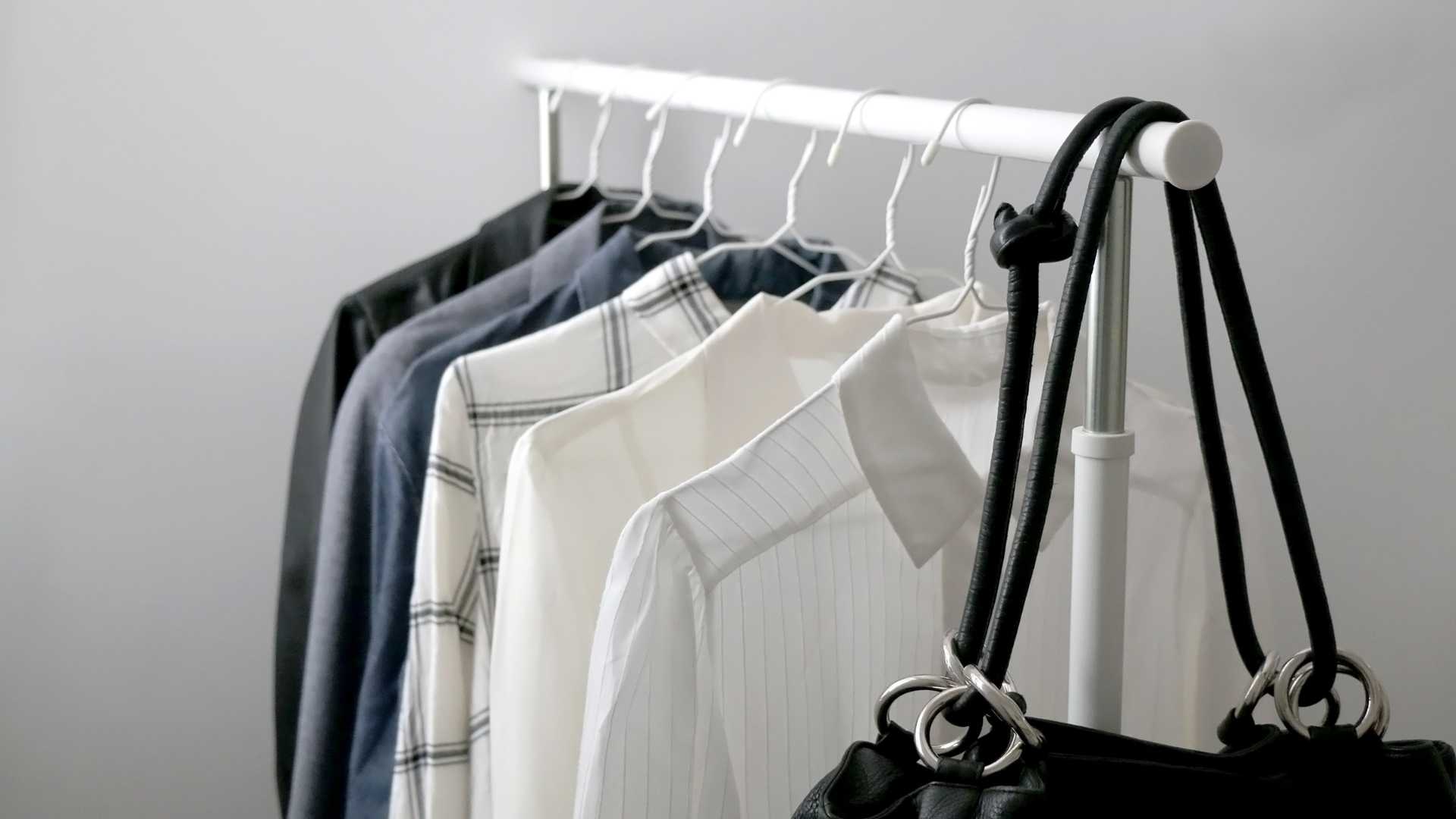
My own version is unglamorous. There are three things at the front of the rail that I know work, and everything else is optional. On the mornings when I feel least like being looked at, I take one of the three and think about nothing. That is the confidence people are describing when they credit a capsule wardrobe. It is not really about minimalism at all. It is about having already made the decision back when you were calm enough to make it well.
Sources: WRAP, Citizen Insights research on UK clothing longevity, 2022, and WRAP data on UK used textiles discarded in 2021; Adam H and Galinsky A, Enclothed cognition, Journal of Experimental Social Psychology, 2012, and the replication reported by Burns and colleagues; Courtney Carver, published description of Project 333.
How many things do you actually wear?
Count them this week and tell me in the comments. I suspect most of us are running on about fifteen, and there is nothing wrong with that.