
I wrote the first version of this article a very long time ago, and it contained two instructions I would now argue with: snacking is banned, and cook without fat. Neither is NHS advice. Here is the same subject, rebuilt around the numbers the NHS actually publishes.
In Short
- A 600 calorie daily reduction puts most women near 1,400 calories a day and most men near 1,900
- Snacking is not forbidden; eating at regular intervals is what stops the late-afternoon collapse
- Exercise on its own typically shifts only two to three kilos, which is not a reason to skip it
- Vibration plates do not reduce body mass or fat mass on their own, according to a 2025 meta-analysis of 20 trials
- 1 The number that makes the rest of this article make sense
- 2 Eating properly, minus the two rules I got wrong
- 3 5 A Day, and what a portion actually is
- 4 Exercise, and what it honestly does to the scale
- 5 The Power Plate paragraph, revisited
- 6 The habits list, rewritten
- 7 Three things people ask me about this
The number that makes the rest of this article make sense
Weight loss is a maths problem wearing a psychology costume. The maths part is small enough to fit in a table, and the NHS publishes it openly rather than selling it back to you.
| What | NHS figure | What it means on a Tuesday |
|---|---|---|
| Daily reduction | About 600 calories below your needs | Roughly one meal’s worth, spread across three |
| Typical daily target | 1,400 for the average woman, 1,900 for the average man | Enough food to cook properly; not enough to stop paying attention |
| Safe rate of loss | 0.5kg to 1kg a week | A stone takes around three months, not three weeks |
| Activity | 150 minutes moderate a week, plus strengthening on 2 days | Five brisk half-hours, and two sessions with something heavy |
If a plan you are reading somewhere else promises faster than a kilo a week without medical supervision, the number to check is what it has cut to get there. Below 800 calories a day is a medically supervised intervention, not a diet you pick up from a blog.
Eating properly, minus the two rules I got wrong
The original article said to banish greasy food, cut out fast food, stop cooking with fat and ban snacking outright. Most of that is fine as a general direction and two parts of it are actively unhelpful.
Snacking is not the enemy
NHS guidance on tiredness and energy points the other way: eat at regular intervals, roughly every three to four hours, rather than going long stretches and then eating a large meal. What matters is what the snack is, not whether one exists. An apple and a yoghurt at four o’clock, which the original plan actually recommended two paragraphs before banning snacking, is the thing that stops the 7pm decision-making from going badly.
Cooking without any fat is not the goal either
Fat is calorie-dense, so the amount matters, and that is a genuinely useful thing to know. But olive oil measured with a spoon instead of poured is a better rule than “no fat”, because it survives longer than a fortnight and it does not make vegetables taste like a punishment. The one that catches everybody is the pouring, not the presence.
Balance the plate, then stop optimising it
Protein, vegetables, a slower carbohydrate, something fermented or dairy, a piece of fruit. That was the shape the original article recommended and it is still right. Varying it matters more than perfecting it, because the diet you get bored of is the one you abandon in week three.

Eat five portions of fruit and vegetables a day
5 A Day, and what a portion actually is
An adult portion of fruit or vegetables is 80g. That is a medium apple, or three heaped tablespoons of cooked vegetables. Dried fruit counts at around 30g, which is roughly a heaped tablespoon of raisins, and the NHS flags that dried fruit is high in sugar and hard on teeth.
Two rules that trip people up. Juice and smoothies count as a maximum of one portion no matter how much you drink, with a combined ceiling of 150ml a day. Beans and pulses also count as a maximum of one portion, however many you eat. So a breakfast smoothie and a lunchtime chickpea salad are two portions between them, not four.
Exercise, and what it honestly does to the scale
Here is the part fitness marketing skips. Exercise programmes on their own tend to produce only two to three kilos of weight loss, considerably less than the calorie burn on paper suggests, because the body compensates: appetite rises, and the unconscious movement you do the rest of the day quietly drops.
That is not an argument for skipping it. It is an argument for what exercise is genuinely for during weight loss, which is keeping the muscle you would otherwise lose alongside the fat, and holding the weight off afterwards. The NHS target is 150 minutes of moderate activity a week plus muscle-strengthening on at least two days, and the strengthening half is the part most people drop first.

A fitness class to build muscles and stretch the muscles
The original article’s argument for a gym over training alone still holds, for an unfashionable reason: a gym is where the strength equipment is, and a class puts a fixed time in your diary that you have to actively cancel. Choosing something you like is not a soft option, it is the only version that is still happening in November.
The Power Plate paragraph, revisited
The first version of this article suggested a vibration plate, on the basis that the machine’s vibrations act on the muscles. They do. What they do not do is make you lose weight.
A systematic review and meta-analysis published in the International Journal of Obesity in 2025 pooled 20 randomised controlled trials covering 585 participants. Whole-body vibration training on its own produced no significant reduction in body mass, in BMI or in fat mass. The one signal worth noting is age: participants aged 50 and over lost more fat, around 1.8%, against essentially nothing in the under-fifties. The authors still consider it a promising tool for neuromuscular and metabolic reasons, which is a different claim from a weight-loss one.
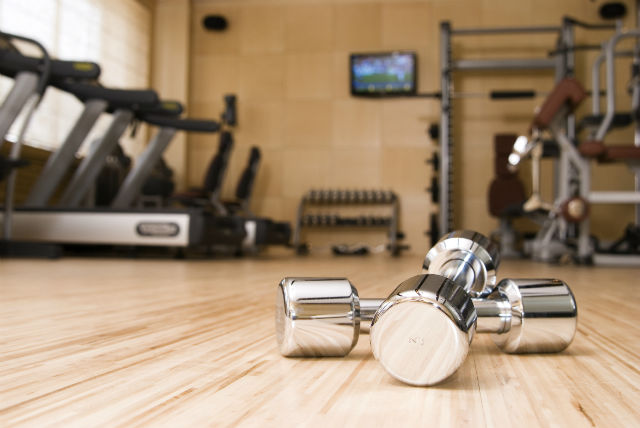
All you need for an effective sports session : Dumbbells
The habits list, rewritten
The original ended on a list of lifestyle points. Most of them were sound; here they are with the reasoning attached, which is what makes a habit stick rather than a slogan.
- Sleep properly. Seven to nine hours for an adult. Short sleep makes appetite regulation harder, which turns every other item on this list into uphill work.
- Watch the alcohol. It is calorie-dense, it lowers your resistance to the takeaway menu, and it makes sleep shallower. The NHS limit is 14 units a week.
- Walk instead of driving where you sensibly can. This is the unconscious activity that otherwise drops away during a diet.
- Take actual time for yourself. Not as a reward for compliance. Stress eating is a real mechanism, not a character flaw.
- Set a goal you can measure weekly, then weigh yourself under the same conditions once a week and look at the trend rather than the day.
Three things people ask me about this
Should I weigh myself every day?
Daily weighing is fine if the number does not ruin your morning, because water shifts of a kilo or more are ordinary. What you are reading is the direction over four weeks, not Tuesday against Monday.
Do I have to count calories?
No, but you have to have some idea of the size of the change you are making, otherwise a 600 calorie reduction is a wish rather than a plan. Counting for two weeks to calibrate your eye, then stopping, works for a lot of people.
Why did it stop working after two months?
Because a smaller body needs fewer calories, so the deficit you set at the start has quietly shrunk. That is normal physiology, not failure, and it is one of the moments where a registered dietitian is genuinely worth the appointment.
If the food side is where you get stuck, the piece on which foods actually help, and which ones only sound like they do goes through the evidence one ingredient at a time.
First published August 2014. Fully rewritten and fact-checked on 14 August 2026. This is general information and not medical or dietetic advice. No weight loss method is risk-free or right for everyone; if you are pregnant, managing a health condition, or have a history of disordered eating, speak to your GP or a registered dietitian before changing how you eat.
Sources: NHS Better Health weight loss guidance and the NHS 12-week plan, in line with NICE PH53; NHS 5 A Day portion sizes; NHS physical activity guidelines for adults; NHS self-help tips to fight fatigue; Gou P et al., Effectiveness of whole-body vibration training on body mass reduction: a systematic review and meta-analysis, International Journal of Obesity, 2025.
What is the rule you have quietly stopped following?
Mine was the no-snacking one, and dropping it made everything else easier. Tell us which one you abandoned in the comments.
Read next: which sports really burn the most, with the numbers attached