
The best outfit I saw on set last year was a 1970s silk blouse worn with plain black trousers from the high street, and nothing else that was remotely old. The stylist told me afterwards she had spent an hour talking the model out of adding a matching hat. That restraint is the entire trick, and it is the part almost nobody applies at home.
In Short
- One vintage item per outfit reads as style. Three reads as costume.
- Shape ages faster than colour or fabric, so buy for the silhouette you already wear.
- Vintage sizing follows no modern chart. Ignore the label and check the garment measurements.
- Budget for alterations before you buy, not after the piece has sat unworn for a year.
Why one vintage piece beats a whole vintage outfit
A single old garment surrounded by modern pieces reads as a deliberate choice, because the contrast tells everyone you meant it. Put two or three together and the eye stops seeing individual items and starts seeing a decade, which is how you end up looking like you are on your way to a themed party.
Pick the piece with the strongest personality and let it be the loudest thing you are wearing. A 1980s blazer with wide shoulders needs quiet trousers and a plain shoe underneath it. A beaded 1920s style top needs nothing more complicated than a straight-leg jean.
The exception is when everything you own is quiet. If your wardrobe runs to black, grey and denim, two vintage pieces can sit together without shouting, because there is no competition anywhere else in the outfit.
The vintage pieces that cross over most easily
Some garments survive their decade because their shape never really left. Those are the ones to hunt for first, especially if you are new to buying secondhand and do not yet trust your eye.
| Piece | Wear it with | Watch out for |
|---|---|---|
| Silk blouse | Modern tailored trousers, plain knitwear | Underarm staining and perished seams, both common and both permanent |
| Wool blazer | A plain tee and straight jeans | Shoulder pads that sit wider than your actual shoulder |
| Leather jacket | Anything, which is why it is worth paying for | Cracked leather at the elbow, which no conditioner will fix |
| Pencil skirt | A fine-gauge jumper and modern boots | A waist cut for foundation garments nobody wears now |
| Denim jacket | Dresses, in defiance of the weather | Sleeves that are shorter than they look on the hanger |
Prints are the other reliable crossover, particularly small florals and geometric repeats. What dates a garment hardest is rarely the pattern. It is the cut of the sleeve and the position of the waist.
Vintage sizing is fiction, so measure instead
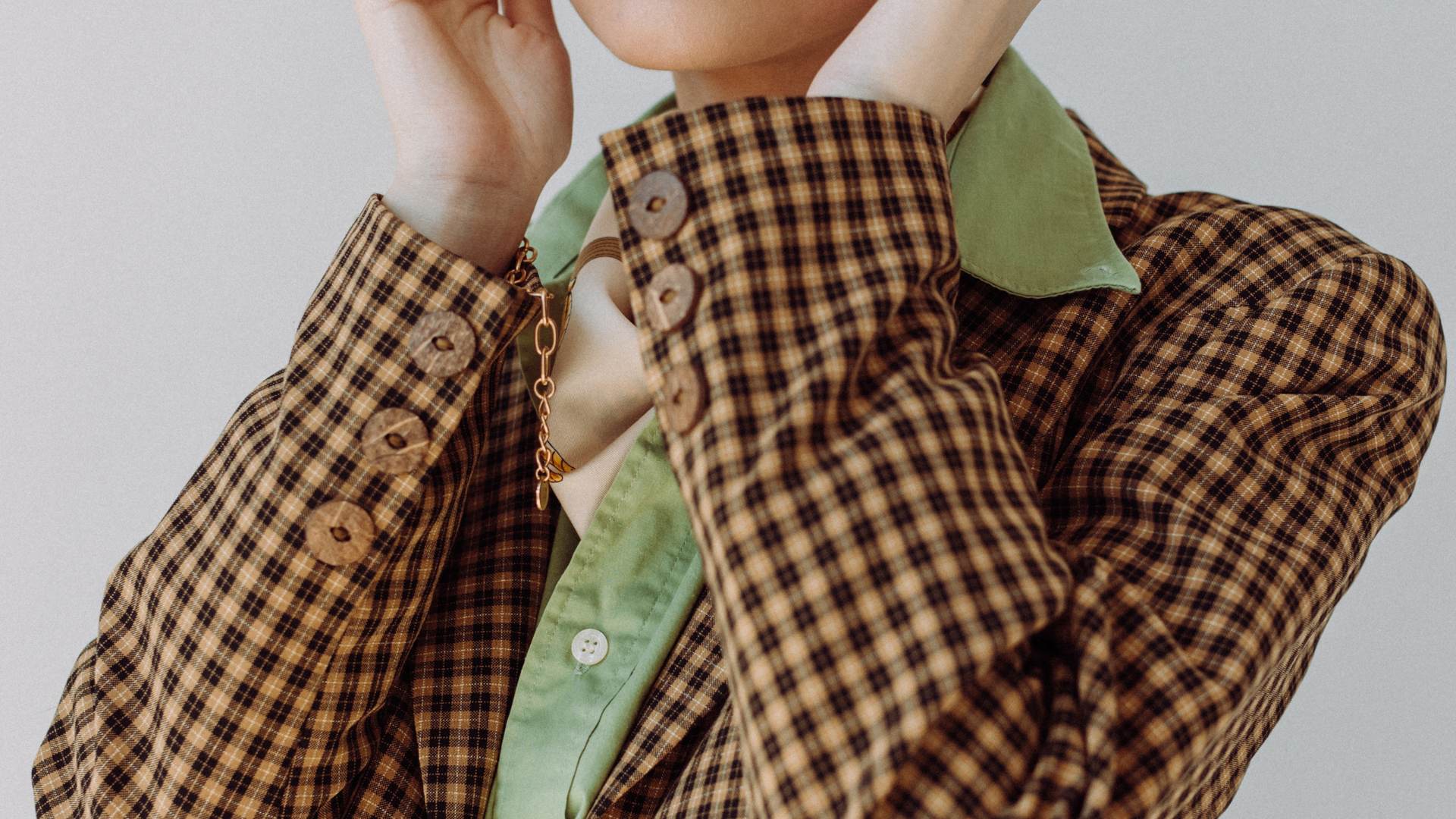
A number printed inside a garment from forty years ago tells you nothing usable about whether it will fit you. Sizing systems have shifted repeatedly since, and they varied by manufacturer even at the time. Take a tape measure to the rail, or ask an online seller for flat measurements across the chest, waist, hip and shoulder.
Once it fits roughly, a good tailor turns it into something you will actually wear. These are the alterations worth paying for, in the order I would spend the money.
- Shoulders on a jacket. Expensive and fiddly, but it is the seam that decides whether the whole thing looks yours or borrowed.
- Hem length. Cheap, fast, and it moves a skirt from dated to current more effectively than any styling.
- Taking in a waist. Straightforward on a skirt or dress that is generous through the middle.
- Removing shoulder pads. Often free, sometimes a mistake. Ask the tailor to pin them out first so you can see the line without them.
- Replacing buttons. The smallest change on the list and frequently the one that stops a coat looking like a period piece.
Where to actually find the good stuff
Sourcing vintage well is mostly a patience problem rather than a knowledge problem. You are waiting for the right thing to appear rather than choosing between options, which is the opposite of how most of us shop.
Go in with a shortlist
Walking into a vintage shop with no plan is how you come home with a novelty jumper. Decide on two or three specific things you are missing, a decent blazer or a slip dress or a wool coat, and let the rest of the rail slide past you.
In person, use your hands
Hold the fabric up to the light for thinning, pull gently at the seams, and smell it. Musty storage smells usually wash out. Smoke and mildew frequently do not. Check zips work and count the buttons, because a full replacement set changes the character of a garment whether you want it to or not.
Charity shops and curated rails are not the same hunt
A curated vintage shop has already done the sorting, checked the condition and priced accordingly, which is why the same blouse can cost four times what it would in a charity shop two streets away. You are paying for someone else’s time and eye. Charity shops are cheaper and far more random, so they reward frequent short visits rather than one long browse. I check the two near my flat most weeks and walk out empty-handed nine times in ten, which is roughly the correct hit rate.
Online, read the measurements twice
Sites like Etsy and eBay carry enormous vintage inventories, and the good sellers photograph flaws deliberately and list flat measurements as standard. Treat a listing with three blurred photos and no measurements as a gamble rather than a bargain, and check the returns policy before anything else.

Buying secondhand also happens to be the least complicated way to shop more responsibly, since nothing new has to be made. If that side of it interests you, it sits alongside what the brands genuinely changing the fashion industry are attempting from the other direction.
What people ask me about wearing vintage
How do I stop a vintage outfit looking like fancy dress?
Keep the proportion modern. Wear an old top with the trousers you already own rather than the trousers that came from the same decade, and skip the period hair and makeup entirely. Costume happens when every element agrees with every other one.
Is it worth altering a cheap vintage find?
Often yes, because the alteration cost is fixed regardless of what you paid. A twelve pound blazer plus forty pounds of tailoring is still a bargain if you wear it weekly. The same forty pounds spent on something you were lukewarm about is money gone.
How should I wash and store vintage clothing?
Hand wash in cool water with a mild detergent unless a care label tells you otherwise, and dry flat rather than in a machine. Store on padded hangers, away from direct light, and give wool a sealed bag or a cedar block for the summer.
Which era is the easiest to start with?
Anything from the 1990s, because the silhouettes are closest to what we wear now and the fabrics have had the least time to degrade. It is also the cheapest end of most rails, which makes it a forgiving place to make your first mistakes.
What was your best vintage find?
I am always after a good market recommendation, so tell me what you found and where you found it in the comments.