
Stylists I work with carry far less jewellery than you would expect. One box, mostly plain, and the same six pieces turn up shoot after shoot. Watching that for a few years taught me more about accessorising than any amount of scrolling did, because it turns out the skill is almost entirely about what you leave in the box.
In Short
- The neckline chooses the necklace. Every other consideration comes after that.
- One focal point per outfit. If two pieces are competing, one of them is wrong.
- Mixing gold and silver works when the pieces share a scale or a finish, not just an intention.
- Check for a hallmark and think about nickel before you think about trends. Cheap earrings cause more misery than bad styling ever does.
- 1 Let the neckline choose the necklace
- 2 One focal point, and everything else supports it
- 3 Mixing metals, and when it stops working
- 4 Earrings answer to your hair, not your outfit
- 5 Three approaches to colour that hold up
- 6 The practical part that style guides skip
- 7 Building a set you will actually wear
- 8 Questions I get asked about accessorising
Let the neckline choose the necklace
A necklace either follows the line of your neckline or fights it, and there is not much middle ground. The reliable principle is that the necklace should sit either well above the neckline or well below it, never so close that the two shapes almost match but not quite.
| Neckline | What works | What fights it |
|---|---|---|
| V-neck | A pendant or Y-shape that echoes the V and sits inside it | A wide collar necklace that cuts across the opening |
| Crew neck | A statement piece worn over the fabric, or a long chain past the hem of the neckline | A short chain that disappears half under the collar |
| Strapless or bandeau | A choker or collar, worn high, so there is a clear gap of skin below | A mid-length pendant that lands on bare chest with nothing to relate to |
| Boat neck | Long layered chains, or nothing at all and strong earrings instead | Anything that sits on the horizontal line of the neckline itself |
| High neck or polo | A long pendant over the top, treated as part of the garment | A delicate chain that vanishes into knitwear texture |
Shirt collars are the exception worth knowing. With the top two buttons undone, a short chain sitting inside the open collar reads as deliberate, which is one of the few cases where short and close actually works.
One focal point, and everything else supports it
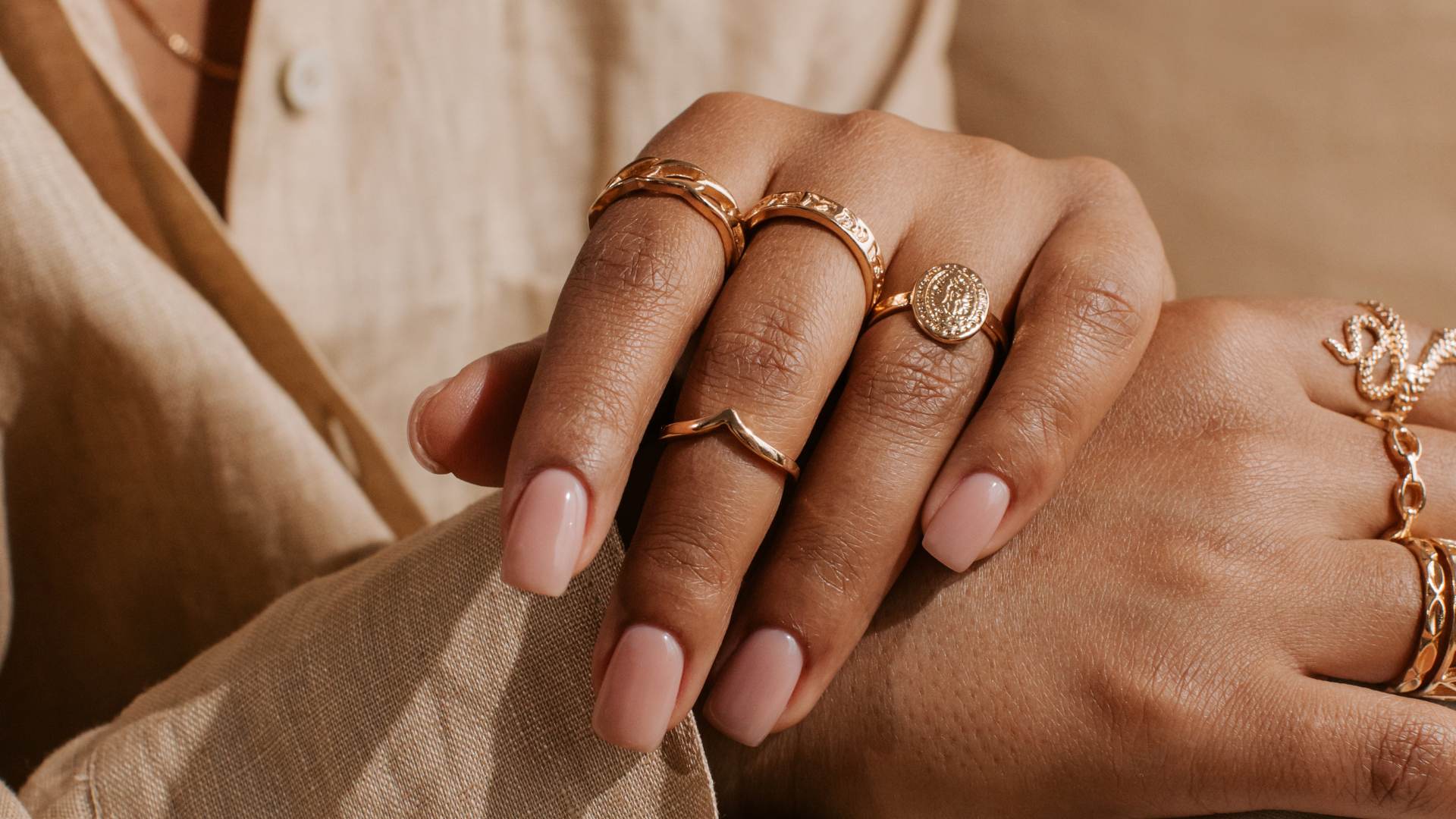
Pick the loudest piece before you get dressed, then choose everything else to stay out of its way. A wide cuff means small earrings. Chandelier earrings mean bare ears are the only thing happening above the shoulders and the neck stays empty.
The reason is practical rather than aesthetic snobbery. Two strong pieces at similar scale make the eye bounce between them without settling anywhere, and the result photographs as busy even when it looked fine in the mirror. In a still frame, competing focal points are much more obvious than they are in real life.
The version of this that most people get wrong is the accumulation. Nothing you put on is individually too much, but by the time the watch, the three rings, the bracelet stack, the pendant and the hoops are all present, the outfit underneath has stopped being visible. Take one thing off before you leave, which is old advice and still correct.
Mixing metals, and when it stops working
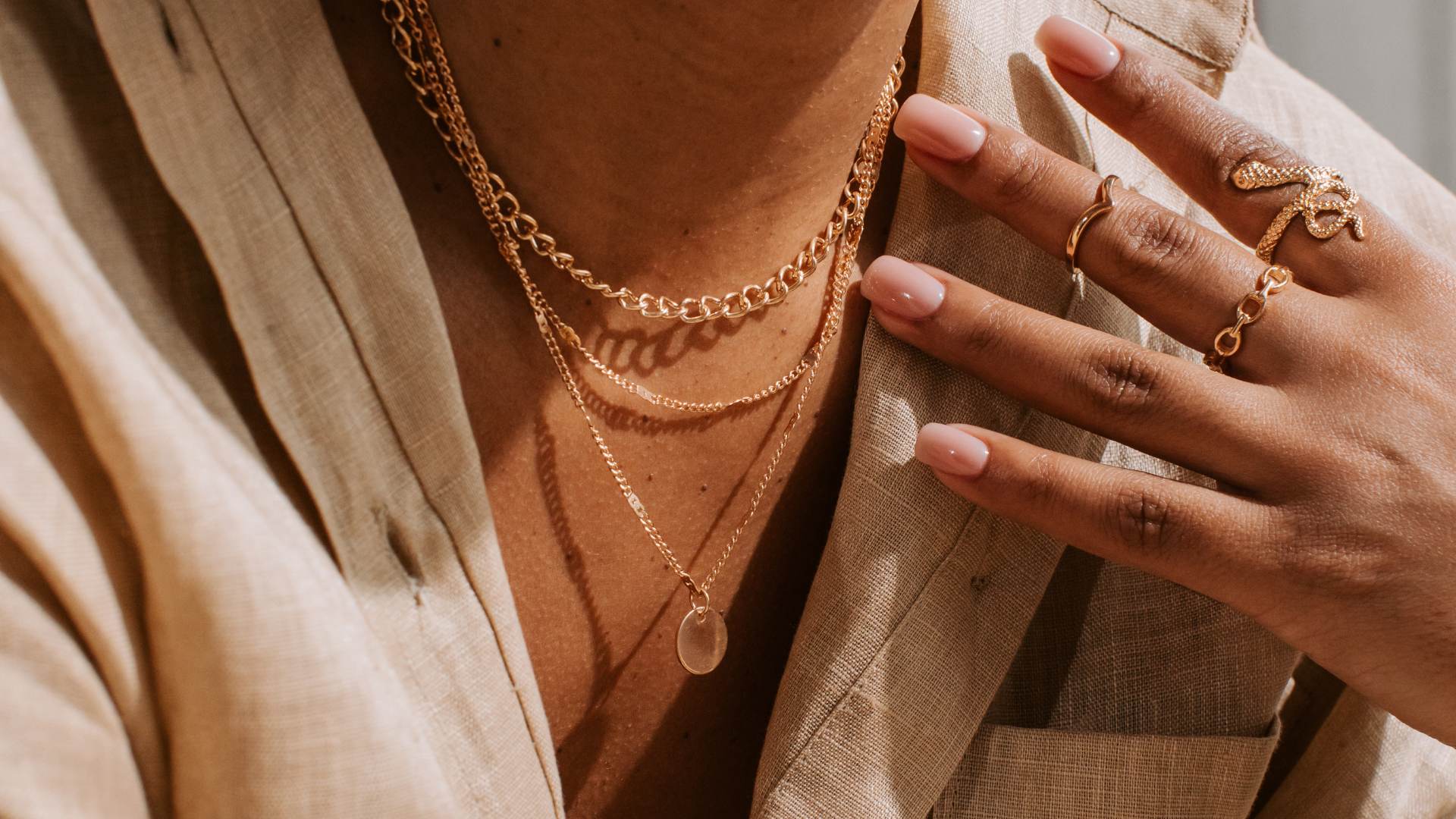
Mixing gold and silver is fine and has been for years. What makes it look intentional rather than accidental is a shared quality: a similar chain weight, a similar finish, a repeated shape, or one piece that contains both metals and acts as a bridge.
Where it goes wrong is when the two metals sit at different scales and different levels of formality, such as a delicate fine gold chain worn with a chunky brushed silver cuff. That reads as two outfits rather than one. Keeping the mix within the same body zone also helps: mixed metals on one wrist looks considered, whereas gold at the ears and silver at the wrist tends to look like you got dressed in two stages.
Earrings answer to your hair, not your outfit
Earrings sit closer to the face than any other accessory, so they compete with your hair and your makeup long before they interact with what you are wearing. That is the order I think about them in.
Hair up leaves the whole ear and neck visible, which is the situation drop earrings were made for. Hair down and thick swallows anything delicate, so either go bigger or accept that a fine stud is decoration only you know about. Short hair or a sharp bob sits close to the jaw and leaves room for shape rather than length, meaning geometric studs and small sculptural pieces rather than long drops that tangle in the ends.
The working consideration nobody mentions is weight. Heavy statement earrings drag on the lobe after a couple of hours, and by the evening they are pulling the piercing sideways in every photograph. If a pair is going to be worn for a full day, weigh it in your hand first.
Three approaches to colour that hold up
Forget elaborate colour theory for a moment. In practice, almost everything that works falls into one of three approaches.
- Echo. Pick up a colour already present in the outfit, usually a minor one such as a stripe or a button. This is the safest and the least interesting.
- Contrast. Choose something opposite on the colour wheel, such as an amber or coral stone against a deep blue dress. Bolder, and it needs the rest of the outfit to be plain.
- Neutral anchor. Let plain metal, pearl or clear stone do the work and let the clothes carry the colour. This is what most of the stylists I work with actually do, most of the time.
Black is the outlier that makes people overthink. A black dress takes almost anything, which is precisely why it is worth being decisive: one strong piece against black looks expensive, three looks like you could not choose.
The practical part that style guides skip
Two pieces of genuinely useful information, both specific to buying jewellery in the UK, and both worth more over a year than any styling tip above.
Nickel. Nickel is the most common cause of allergic contact dermatitis, and once you are sensitised it is permanent. UK REACH rules limit how much nickel jewellery may release onto skin: no more than 0.5 micrograms per square centimetre per week for items in prolonged contact, and a stricter 0.2 for posts inserted into piercings. That limit is the reason cheap earrings sold by reputable retailers are usually fine and market-stall bargains sometimes are not. If your ears sting after a few hours, that is information rather than bad luck.
Hallmarks. Anything sold in the UK as gold, silver, platinum or palladium must carry a hallmark from an assay office above a certain weight, currently 1 gram for gold and palladium, 7.78 grams for silver and 0.5 grams for platinum. Below those weights no hallmark is required, so its absence on a fine chain proves nothing. Above them, an unmarked piece described as solid silver is a reason to walk away.
Beyond that, storage does more for how jewellery looks than polishing does. Keep silver in a closed box or a zip bag with the air pressed out, put it on after perfume and hairspray rather than before, and take it off before swimming. Most of the tarnished, dull pieces I see were simply left in a dish on a windowsill for a year.
Building a set you will actually wear
If you are starting from scratch, buy in this order: a pair of everyday hoops or studs, one plain chain that suits most of your necklines, one piece with real personality, and a watch or cuff if you like something on the wrist. Four decisions cover the overwhelming majority of days.
Everything after that should be chosen against what you already own rather than in isolation, which is the same logic that makes a capsule wardrobe work. A gorgeous necklace that suits none of your necklines is not a bargain at any price.
Questions I get asked about accessorising
What are the basic rules for matching jewellery with an outfit?
Work in this order: the neckline decides the necklace, the occasion sets how bold you can go, and one piece takes the lead while the rest stay quiet. Colour is the last decision, not the first, and it is the easiest one to get right.
How do I choose the right necklace for different necklines?
Match the shape or stay clear of it. V-necks take a pendant or Y-shape inside the opening, crew necks take either a statement piece over the fabric or a long chain below it, strapless tops take a choker high on the neck, and boat necks take long layers or nothing at all.
Is it acceptable to mix different jewellery metals?
Yes, provided the pieces share something beyond the intention to mix. A similar weight of chain, a similar finish, a repeated motif, or one item containing both metals will hold the look together. Different scales and different levels of formality will not.
How do I wear statement jewellery without over-accessorising?
Choose the statement piece first and build down from it. One bold item, plain everything else, and a simple outfit underneath so the piece has room. If you are unsure whether you have gone too far, you have, and the last thing you put on is the thing to remove.
My earrings make my ears itch. Is that an allergy?
Often it is a nickel reaction rather than an infection, particularly with inexpensive metal. Switch to titanium, surgical steel or solid gold posts and see whether it settles. Persistent soreness, swelling or weeping needs a pharmacist or GP rather than a different pair of earrings.
Which piece do you wear with everything?
Mine is a plain gold hoop I have owned for eight years and have replaced twice after losing one. Tell me yours in the comments.