
I live out of a kit bag half the week, and the only footwear that survives a twelve-hour shoot is a pair of trainers I stopped thinking about years ago. That is my honest test for this list. Not what looks best on a shelf, but what I would put on at six in the morning knowing I will still be standing at eight that night.
In Short
- Canvas for summer, leather for wet months, cushioned mesh for anything involving distance.
- Four low-profile classics handle roughly eighty per cent of everyday wear.
- A single statement pair is enough. Two competing loud sneakers cancel each other out.
- Rotate rather than repeat. Trainers worn on consecutive days wear out noticeably faster.
- 1 The ten, at a glance
- 2 What I check before buying any pair
- 3 The four that go with everything
- 4 The two with real attitude
- 5 The three built for long days
- 6 The luxury outlier
- 7 Building a rotation rather than a collection
-
8
Sneaker questions I get asked
- 8.1 How many pairs of trainers do I actually need?
- 8.2 Which sneakers cope best with rain?
- 8.3 Should I size up in trainers?
- 8.4 Is one pair really enough for every season?
- 8.5 Are older silhouettes a safer buy than new releases?
- 8.6 How do I keep white trainers white?
- 8.7 Which pair do you actually reach for?
The ten, at a glance
Before the detail, here is the whole list in one place, with the year each silhouette first appeared and the season it earns its place in.
| Sneaker | First out | Best season | Wears like |
|---|---|---|---|
| Nike Air Force 1 | 1982 | Autumn to spring | Sturdy, weatherproof, heavy |
| Adidas Stan Smith | 1960s | All year | Flat, quiet, easy to clean |
| Adidas Samba | Late 1940s | Spring and autumn | Slim, low, narrow fit |
| Converse Chuck Taylor All Star | 1917 | Summer | Flat, light, no support |
| Air Jordan 1 | 1985 | Autumn to winter | High cut, supportive, bold |
| Nike Dunk | 1985 | All year | Firm, flat, colour-led |
| Nike Air Max 1 | 1987 | Spring and summer | Cushioned, breathable |
| Nike Air Max 90 | 1990 | All year | Chunkier, harder-wearing |
| New Balance 990 | 1982 | All year | The most comfortable here |
| Louis Vuitton Trainer | 2019 | Dry days only | Soft leather, high maintenance |
What I check before buying any pair
Trainers are one of the few things I will not buy online without having tried the model somewhere first, because two shoes at the same size can fit completely differently. Five things tell you almost everything.
- The sole thickness. Flat soles look sharper and wear out your feet faster. Decide which matters more for how you actually spend your days.
- The upper material. Leather handles rain and holds its shape, canvas breathes and creases, mesh does neither but weighs nothing.
- The collar height. Anything that sits above the ankle bone will rub if the padding is thin, and you will not notice in the shop.
- The insole. If it lifts out, you can replace it, which quietly doubles the useful life of a shoe you love.
- The toe box. Press down with your thumb. You want a centimetre of clearance in front of your longest toe, standing up, not sitting.
The four that go with everything
These are the low-profile classics, and if you only ever buy from one group, make it this one. They share a flat sole, a simple upper and enough history that nobody reads them as a trend.
Nike Air Force 1
Released in 1982 and designed by Bruce Kilgore, the Air Force 1 was the first basketball shoe to use Nike’s Air cushioning. What keeps it relevant four decades later is the thick sole and the tumbled leather upper, which shrugs off rain in a way canvas never will. It is a heavy shoe, noticeably so if you are used to something slim, and the white version needs wiping down weekly or it stops looking crisp. I wear mine with wide-leg trousers that break over the top, because the bulk of the sole needs a hem with some volume to balance it.
Adidas Stan Smith
A tennis shoe from the 1960s that originally carried the French player Robert Haillet’s name, renamed for Stan Smith in the early 1970s. The appeal is that it disappears. Plain white leather, perforated three stripes, a coloured heel tab, and that is the entire design. Adidas has released versions using recycled materials alongside the standard leather, and the flat sole means it works with almost any trouser length.
Adidas Samba
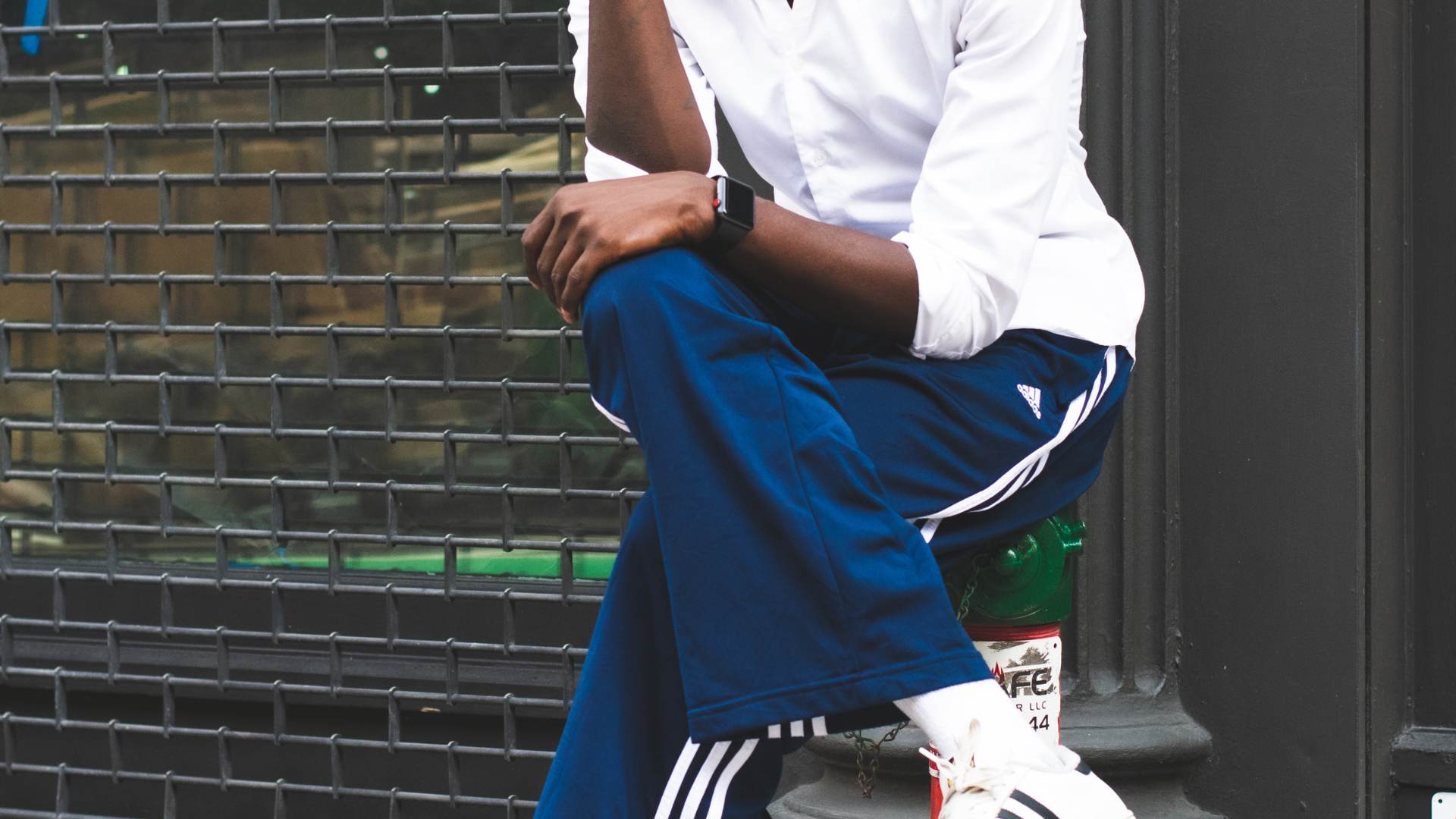
Built in the late 1940s for training on frozen pitches, which is why it has that gum sole and a profile close to the ground. The Samba runs narrow and short, so go up half a size and be honest with yourself if you have a wide foot. It has been everywhere for the past couple of years, which is worth knowing if you would rather not wear the shoe of the moment.
Converse Chuck Taylor All Star
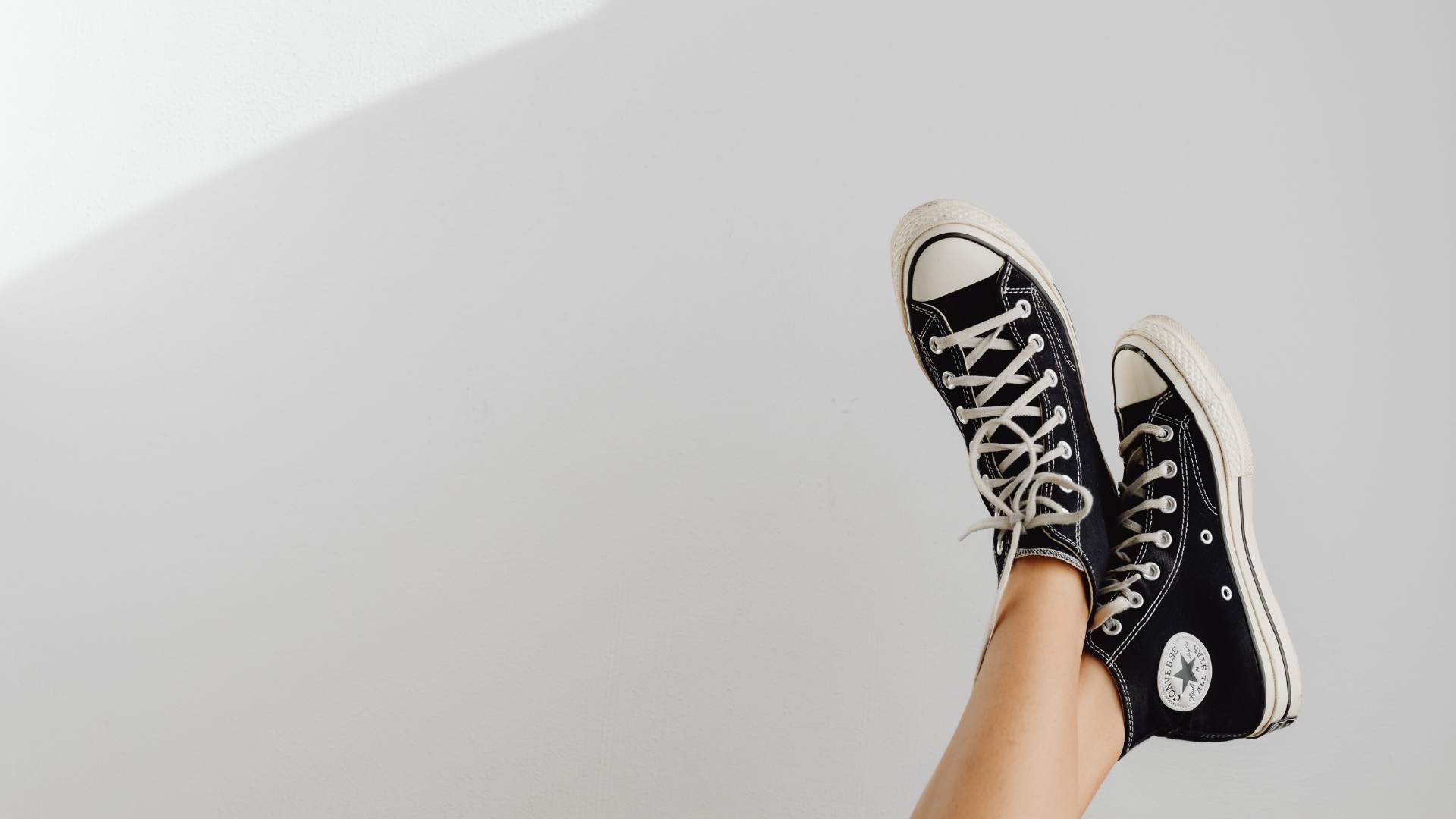
The first All Star appeared in 1917, and Chuck Taylor’s name was added to the ankle patch in 1932. Canvas, rubber, no cushioning whatsoever. That last part matters: Chucks are a summer shoe for short distances, not a walking shoe, and anyone who has done a festival in them knows exactly what I mean. They are also the cheapest way into a genuine classic.
The two with real attitude
Both of these came out of basketball in 1985 and both are loud by design. Wear one at a time, keep the rest of the outfit plain, and let the shoe do the talking.
Air Jordan 1
Designed by Peter Moore and released to the public in 1985, the Air Jordan 1 is the shoe that turned trainers into collectables. The high-top cut gives real ankle support and reads as deliberate rather than sporty when it sits under a straight jean. Colourways like the Bred and the Chicago are the ones people recognise, and the demand for retro releases means prices swing wildly depending on which version you chase.
Nike Dunk
Also 1985, originally a college basketball shoe built from parts of earlier Nike models, later adopted by skateboarders who wanted a flat, durable sole. The Dunk lives on its two-tone colour blocking, which is either the point or the problem depending on your wardrobe. Fit is firm and the sole is stiff for the first fortnight, then it settles. If you like the shape but not the noise, the single-colour versions exist and read far quieter, which is the pair I would suggest to anyone buying their first one.
The three built for long days
Cushioning is not a fashion feature, it is the difference between finishing a day comfortably and limping home. If you walk a lot, spend your money here first.
Nike Air Max 1
The 1987 shoe that put a visible Air unit in the sole, designed by Tinker Hatfield. Mesh panels make it the most breathable pair on this list, which is exactly why it belongs to warm weather and exactly why it soaks through in a downpour. The slim profile has aged far better than most late-eighties running shoes.
Nike Air Max 90
Three years later and noticeably more robust, with a chunkier sole unit and more leather across the upper. The Air Max 90 is the one I would pick if I could only own a single Air Max, because it handles a British winter without complaint and still looks right in July.
New Balance 990
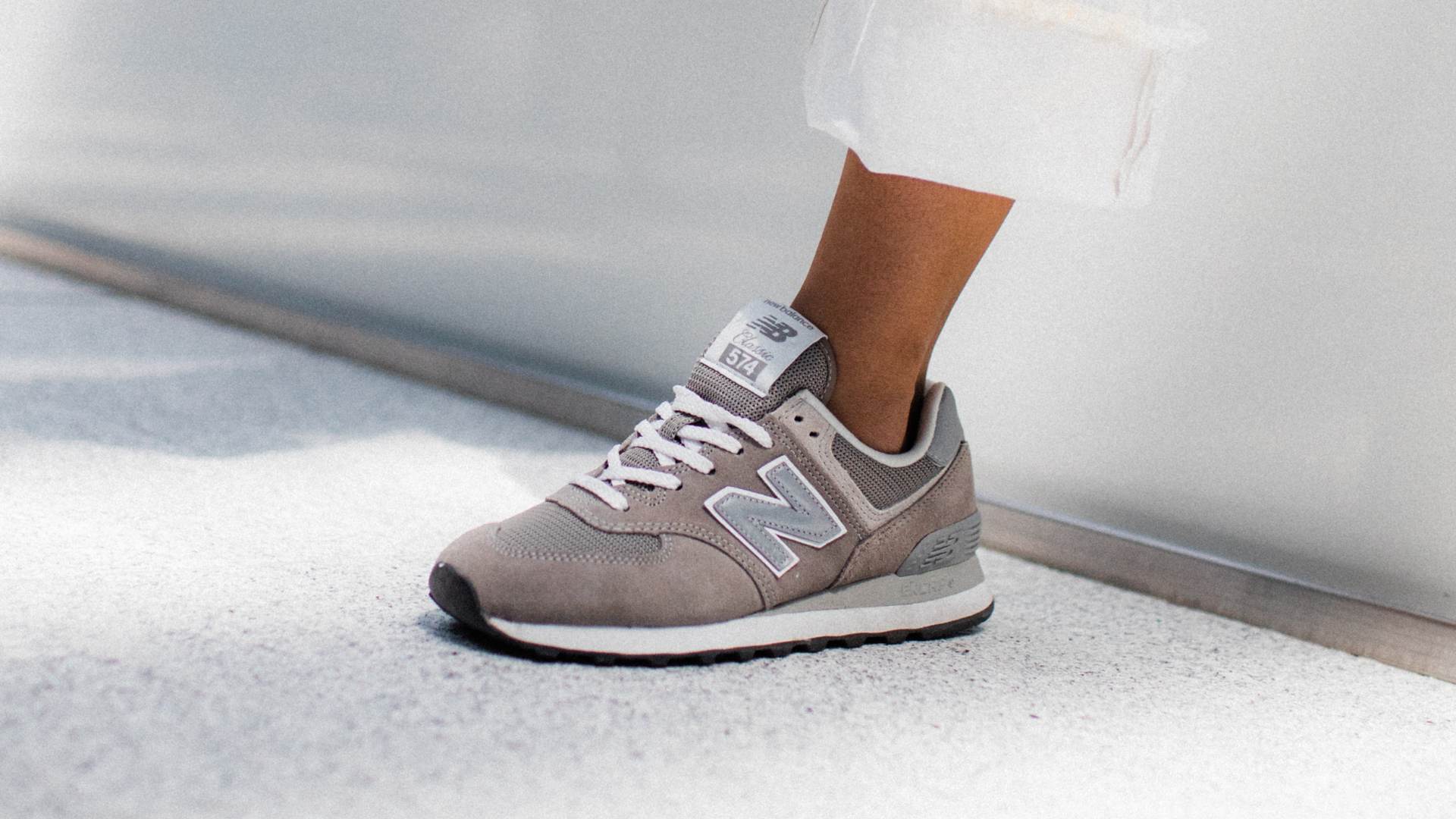
Launched in 1982 as the first running shoe to sell at one hundred dollars, which caused a certain amount of outrage at the time. The 990 pairs a leather and mesh upper with serious midsole cushioning, and it is the most comfortable shoe on this page by a clear margin. Grey is the signature colour and it goes with more than you would expect, navy and olive included. It is the pair I pack for any job that involves standing on concrete all day, and the only one on this list I would happily wear on a long walk without thinking about it afterwards.
The luxury outlier
Louis Vuitton Trainer

Virgil Abloh’s first sneaker for Louis Vuitton, shown for Spring-Summer 2019 and drawing on vintage basketball shapes. Nothing about it is practical. The leather marks, the sole is not built for city pavements in February, and the price sits in a different universe from everything else here. It is on the list because it belongs to the same conversation, not because I think most people should buy it.
If you want the silhouette without the outlay, a well-kept leather high-top from any of the brands above gets you most of the way there, and you will not panic every time it rains.
Building a rotation rather than a collection
Ten pairs is a list, not a shopping instruction. What actually works across a full year is three: one leather pair for wet months, one canvas or mesh pair for summer, one cushioned pair for the days that involve real distance.
Give each pair a day off between wears. Foam midsoles compress under load and need time to recover, and leather uppers dry out properly overnight instead of holding damp. That single habit does more for how long trainers last than any cleaning product.
Knowing when to retire a pair matters as much as knowing when to buy one. The upper usually looks fine long after the midsole has given up, so check the shoe from behind: if the heel leans inwards or outwards when it sits flat on a table, the foam has collapsed on one side and it is quietly changing how you walk. Creasing across the toe is cosmetic. A sole worn smooth at the heel edge is not, particularly on wet pavement. Trainers used for real distance need replacing far sooner than the ones you wear to the shops, however good the leather still looks.
On care, brush the dirt off dry rather than attacking it wet, keep white leather away from washing machines entirely, and use a soft brush with a little mild soap on canvas. Sneakers are also the piece that makes athleisure look intentional rather than lazy, so it is worth keeping at least one pair genuinely clean.
Sneaker questions I get asked
How many pairs of trainers do I actually need?
Three covers a full year comfortably: a leather pair for autumn and winter, something light and breathable for summer, and a cushioned pair for long days on your feet. Anything beyond that is collecting rather than dressing, which is fine as long as you know which one you are doing.
Which sneakers cope best with rain?
Leather uppers with a thick rubber sole, so the Air Force 1, the Air Max 90 or a leather Stan Smith. Canvas soaks through in minutes and mesh is barely better. Whatever you wear, dry them at room temperature rather than on a radiator, which cracks glue and warps the sole.
Should I size up in trainers?
It depends entirely on the model. The Samba and most tennis-derived silhouettes run narrow and short, so half a size up is common. Running-derived shoes like the 990 or the Air Max tend to fit true. Try them on late in the day, when your feet are at their largest.
Is one pair really enough for every season?
You can do it, but you will compromise somewhere. A leather trainer with a substantial sole is the closest thing to an all-year answer, and it will still feel warm in August and offer less cushioning than a proper running silhouette on a long day.
Are older silhouettes a safer buy than new releases?
Generally yes, if you want something you will still wear in three years. A shoe that has survived several decades has already proved it does not depend on a passing trend, and it stays in production, so you can replace it with the same pair when it wears out. New silhouettes can be brilliant, but you are guessing about their staying power rather than knowing.
How do I keep white trainers white?
Wipe them after each wear rather than deep cleaning them monthly. Ninety seconds with a damp cloth stops dirt setting into the leather grain, which is where the permanent grey comes from. For canvas, a soft brush and mild soap, then dry away from direct heat.
Which pair do you actually reach for?
I am curious how many of you own three pairs and wear one. Tell me which trainers have earned their place in the comments.