
I moved into a north-facing flat in Liverpool for two years and spent most of that time assuming I was just tired. It was only when I moved somewhere with a window I could actually sit next to that I started wondering how much of the way I had been feeling was the room rather than me.
In Short
- The WHO indoor guideline for formaldehyde is 0.1 mg/m³, and ventilation is the cheapest way to stay under it.
- Office workers with windows slept an average of 46 minutes more per night in a 2014 study.
- Awaab’s Law came into force on 27 October 2025, putting legal deadlines on damp and mould in social housing.
- Colour psychology is the weakest link in this whole subject, and I would treat it as taste rather than health.
- 1 Indoor air is the part with hard numbers attached
- 2 Daylight is a design decision that shows up in your sleep
- 3 Damp and mould is a health hazard, not a decorating problem
- 4 Clutter, and who it actually lands on
- 5 The colour advice I am not going to give you
- 6 Safety belongs in the design conversation too
- 7 Two questions worth answering before you start
Indoor air is the part with hard numbers attached
Volatile organic compounds, or VOCs, are gases released at room temperature by paints, varnishes, adhesives, some furniture boards and a lot of cleaning products. They matter because they are the one interior design decision with published exposure limits. The World Health Organization set an indoor air quality guideline for formaldehyde of 0.1 mg/m³ for any 30-minute period, a level chosen to prevent sensory irritation of the eyes and upper airways as well as longer-term effects. Reviews since have not shaken it.
The practical translation is dull and effective. Choose low-emission paints and boards when you are buying anyway, and open windows properly after decorating, assembling flat-pack or deep cleaning, rather than for five minutes on a schedule. Emissions from new materials are highest when they are new. Anyone with asthma or another respiratory condition has more reason than most to care, since VOC exposure is associated with upper airway and asthma symptoms.
Daylight is a design decision that shows up in your sleep
Where the light falls in a room changes how you sleep, and there is a decent study on it. Boubekri and colleagues, publishing in the Journal of Clinical Sleep Medicine in 2014, compared 27 office workers in windowless spaces with 22 in daylit ones. The daylit group received 173% more white light exposure during work hours and slept an average of 46 minutes more per night, and scored better on both a standard sleep quality index and the vitality scale of a general health survey. It was a small pilot study, and it was about offices rather than homes, but the mechanism is the same one that sets your body clock at home.
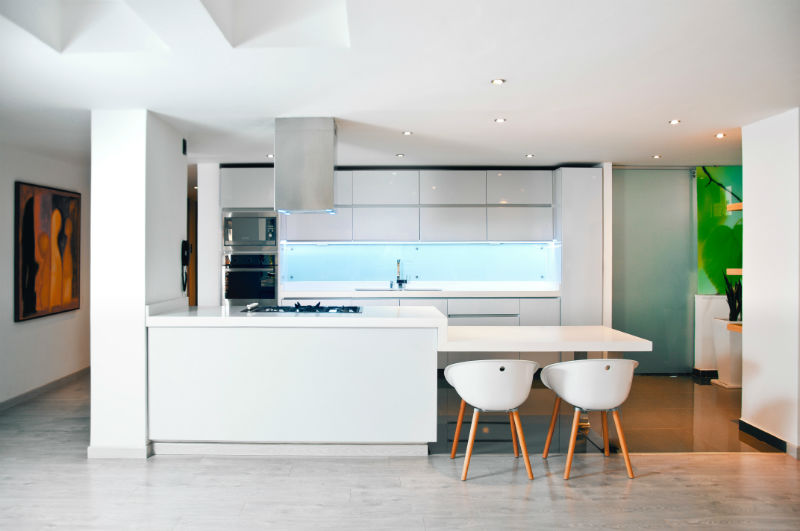
Incredibly bright !
What I would take from it is less about knocking a wall through and more about placement. Put the chair you actually sit in near the window rather than facing the television. Keep the sill clear. Swap heavy curtains for something you can pull fully back. Morning light is the useful kind, and if your working day starts before it arrives, a walk outside beats any lamp.
Damp and mould is a health hazard, not a decorating problem
Mould in a home is a respiratory risk, particularly for children, older people and anyone with an existing lung condition, and in the UK it is now treated as a legal matter rather than a housekeeping one. Awaab’s Law came into force on 27 October 2025, named after Awaab Ishak, the two-year-old who died in 2020 after prolonged exposure to mould in his home. It requires social landlords to investigate reported damp and mould within fixed timescales: emergency hazards inspected and made safe within 24 hours, significant hazards inspected within 10 working days and made safe within five working days of that inspection. Further hazard categories follow from 2026.
If you rent, that changes what a report is. It is not a favour you are asking for. If you own, the same logic applies to your own decisions: extractor fans that vent outside rather than into a loft, drying washing anywhere but a closed bedroom, and treating a recurring black patch in a corner as a building fault to trace rather than a stain to wipe.
Clutter, and who it actually lands on
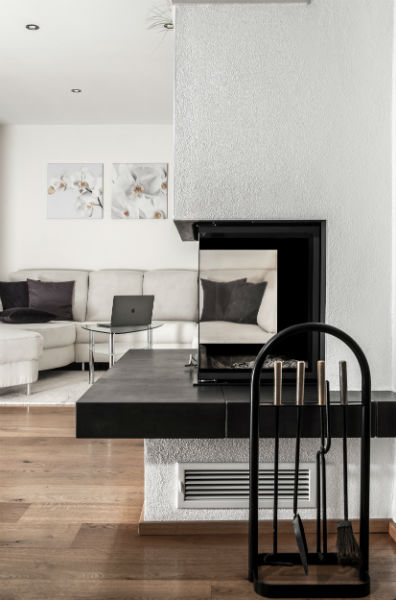
The claim that mess raises stress is usually made without a source, so here is one. Saxbe and Repetti, writing in Personality and Social Psychology Bulletin in 2010, recorded 60 dual-income spouses giving guided tours of their own homes and analysed the language they used. Wives who described their homes in terms of clutter and unfinished projects showed flatter diurnal cortisol slopes, a pattern linked to poorer health outcomes, and rising depressed mood across the day. Women who described their homes in restful and nature-related terms showed the opposite. The effect held after controlling for marital satisfaction and personality.
Two honest caveats. It is a correlational study on a modest sample, so it does not prove that tidying up fixes anything. And the effect showed up in the wives rather than the husbands, which says as much about who carries the mental load of a household as it does about shelving. Still, if your home reads to you as unfinished, that perception is doing something measurable, and the fix is usually fewer objects rather than more storage. I found the same principle working on my wardrobe before I ever applied it to a living room, which is more or less the argument behind minimising a wardrobe down to what you actually wear.
Nice, right ?
The colour advice I am not going to give you
Almost every article on this subject tells you to avoid dark colours because they lower your mood. I have looked for the evidence and it is thin. Reviews of colour and psychological functioning describe a field held back by small samples, poor colour specification and results that do not replicate, with much of the popular framework descending from early twentieth-century writers whose work was never tested to modern standards. Lighting, context and personal preference routinely overwhelm whatever effect the hue itself has.
So paint the bedroom deep green if deep green is what you want to wake up in. The health-relevant version of that decision is not the pigment, it is whether the room still gets daylight, ventilates properly and stays dry.
Safety belongs in the design conversation too
The original version of this article made a point about emergency exits, and it deserves better numbers than it had. In England, in the year ending March 2025, 24% of dwelling fires had no smoke alarm present, and 31% of dwelling fire fatalities happened in homes without one. Home Office analysis puts people in homes without a working alarm at around eleven times more likely to die in a house fire. Alarms on every floor, tested monthly, and a route out that is not blocked by the furniture you rearranged last spring. That is the design intervention with the largest possible payoff and the smallest possible budget.
Two questions worth answering before you start
Where should I begin if I can only change one thing? Ventilation. It improves the air quality problem, helps with the damp problem, and costs nothing but the habit of opening a window wide for a short burst rather than leaving one ajar all day.
Do houseplants clean the air? Not at any scale that matters in a real room. The famous experiments were done in sealed chambers, and the air exchange from simply opening a window dwarfs anything a few pots achieve. Keep them because you like them, which is a perfectly good reason.
Updated 12 August 2026. General information, not medical advice. If damp, mould or indoor air is affecting your breathing, speak to your GP, and report the condition of a rented home to your landlord in writing.
Sources: WHO Guidelines for Indoor Air Quality: Selected Pollutants, formaldehyde; Boubekri et al., Journal of Clinical Sleep Medicine, 2014; Awaab’s Law, in force 27 October 2025, and Housing Ombudsman guidance; Saxbe & Repetti, Personality and Social Psychology Bulletin, 2010; Elliot & Maier, reviews of colour and psychological functioning; Home Office and MHCLG fire and rescue incident statistics, England, year ending March 2025.
What does your home get wrong?
Mine is still the airflow in the bathroom. Tell me the one thing about your place you know is not helping, and what you have tried so far.