
Wedding shoots taught me this the hard way. The bride is in my chair at seven in the morning and still being photographed at eleven at night, and nobody is willing to sit through a second full face at six in the evening. Everything I know about carrying a routine from day to night came out of solving that on a schedule, with a bag I could carry.
In Short
- Morning protects, night repairs. Same face, two completely different briefs.
- Sunscreen is the one morning step with no evening equivalent and no substitute.
- A day-to-night makeup change is subtraction first, then one deliberate addition.
- Anything that makes skin more sun sensitive belongs in the evening, never before a day outdoors.
What the two routines are actually for
Most routines go wrong because every step is treated as generically good for skin, so people run roughly the same products twice a day and wonder why nothing improves. Split by purpose instead and the decisions get much easier.
| Step | Its job in the morning | Its job at night |
|---|---|---|
| Cleansing | Reset the surface after sleep, nothing more. Water alone is enough for a lot of dry skin | Remove makeup, sunscreen, sweat and city grime, which usually needs two passes |
| Treatment | Antioxidants, light hydration, anything that sits happily under makeup | The heavy lifting: retinoids, acids, anything that needs hours to work undisturbed |
| Moisture | Light enough that foundation still grips | Richer, because nothing is going on top and nothing has to look matte |
| Protection | Sunscreen, every day, the step the whole morning is built around | None needed. This is the gap the morning fills |
| Makeup | Even out, stay put through a working day | Comes off properly, ideally before you are too tired to care |
Read down the two columns and the redundancy shows itself. A rich night cream in the morning fights your foundation. A vitamin C serum at eleven at night is not doing much for anybody. Put each product where its job actually is.
The morning order that stops everything sliding off
Morning products go on thinnest to thickest, and sunscreen goes on last of the skincare, before any makeup. That order is the single most useful thing I can give someone whose base keeps pilling into little grey rolls by mid-morning.
- Rinse or cleanse gently. If your skin feels tight afterwards, the cleanser is too strong for a morning that started with a clean pillowcase.
- Serum on damp skin. A water-light antioxidant or hydrating serum absorbs faster and spreads further than it does on bone-dry skin.
- Moisturiser, lightly. Enough to stop the skin drinking your foundation, not enough to make it slide.
- Sunscreen, generously. Most of us use far less than the amount the SPF number on the bottle was tested with, and applying it thinly is the same as buying a lower factor.
- Wait. Two or three minutes before makeup. Half the pilling problems I get asked about are impatience rather than incompatible products.
That waiting step is the one people skip and the one that fixes the most. Sunscreen films need a moment to set before anything is dragged across them.
The ten minute change before you go out
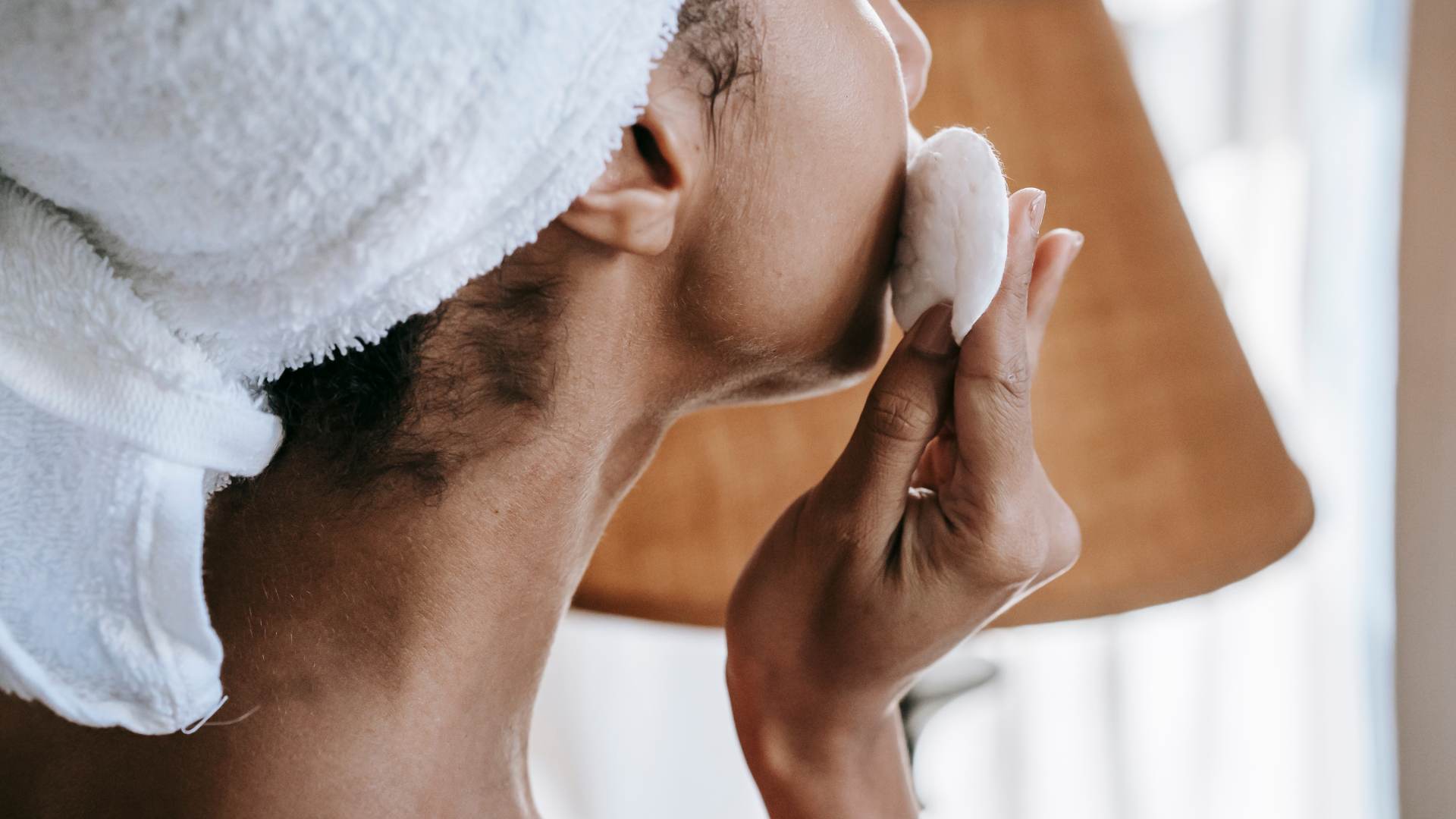
The instinct at six in the evening is to add. Adding to a face that has already been on for ten hours is how you get a heavy, patchy result by nine. Take away first, then add one thing.
- Blot, do not powder. A tissue pressed over the T-zone lifts oil without laying a fresh layer over creased makeup.
- Spot repair only. Concealer where it has genuinely worn off, usually around the nose and under the eyes. Not another pass across the whole face.
- Damp sponge over the cheeks. A barely damp sponge presses everything back down and makes an all-day base look freshly done. This is the trick I use most on set.
- Then one addition. A deeper shade smudged into the outer corner of the eye, or a stronger lip. One, not both, unless the event genuinely warrants it.
On the powder question, be careful before a night of photographs. Heavily light-reflecting setting powders can throw a pale cast back at a camera flash, and I have watched that ruin enough party pictures to keep them off the T-zone when I know a phone camera is coming out.
The other thing worth two minutes is the neck. Evening light and evening necklines both draw attention downwards, and a face carefully evened out above a neck that never got touched is the most common giveaway I see. Whatever you use to spot-repair the face, take a little of it down past the jaw.
Night is a repair shift, not a second morning
The evening routine has one thing to do that the morning cannot: get everything off, then leave actives on skin for hours without sunlight, makeup or a coat collar interfering.
Two cleanses, not one
Sunscreen and long-wear foundation are built to resist water, which is exactly what makes a single splash useless against them. A balm or oil first to break the products down, then a gentle wash to clear the residue. If your flannel still comes away tinted, the first step was too quick.
Water temperature matters more than the products people agonise over. Hot water strips oils and leaves skin flushed and tight, which then gets blamed on the cleanser. Lukewarm, always, and pat rather than rub afterwards.
Where the actives go
Retinoids are the ingredient family with the strongest published evidence for softening the visible effects of sun damage, and dermatology reviews still treat prescription tretinoin as the benchmark other retinoids are measured against. They also increase the skin’s sensitivity to UV light, which is precisely why they belong at night and why sunscreen the next morning stops being optional once you start using them.
Start twice a week, not nightly. Almost every bad retinol experience I hear about is someone who used it every night for a fortnight and then had to stop for a month while their face recovered.
The eye area, honestly
Eye creams are mostly light moisturisers in small expensive jars, and that is fine as long as you expect moisture rather than a cure. Hydration genuinely softens the look of fine crepey lines by evening. Nothing you pat on at bedtime resolves the shadows that come from bone structure or sleep, which I have written about separately in my notes on what actually helps with dark circles.
What I would stop doing
- Running the same six products twice a day. Half of them are in the wrong slot and cancelling each other out.
- Layering new actives all at once. When something stings, you will have no idea which one to blame.
- Sleeping in makeup and calling a wipe a cleanse. Wipes smear rather than remove, and they are the reason so many people wake up with mascara in the crease of the eye.
- Changing everything at the first spot. Skin fluctuates with sleep, cycle and weather. Give a routine six weeks before deciding it failed.
What people ask me while I am working
Do I really need separate day and night products?
Separate products, not necessarily. Separate purposes, yes. One moisturiser can serve both if it is light enough for daytime, but sunscreen has no evening use and a retinoid has no daytime one, so those two at least sit on opposite sides of the clock.
Can I refresh makeup for the evening without taking it all off?
Almost always. Blot, repair the two or three places that have worn, press everything down with a damp sponge and change one feature. A full removal and reapplication is only worth the time when the base has genuinely broken up rather than simply faded.
Is night makeup bad for skin?
Wearing it is not the problem, sleeping in it is. Makeup left overnight sits in pores with a day’s worth of oil and city particles behind it, which is a reliable way to wake up congested. Remove it properly however late it is, even if the rest of the routine gets skipped.
What is the minimum evening routine on a night I cannot face it?
Cleanse properly and moisturise. That is it. Two honest steps beat six resentful ones, and the routine you actually repeat is worth more than the one you abandon after a fortnight.
This is general information drawn from my work as a makeup artist, not medical advice. Persistent acne, eczema, rosacea or any skin change that worries you is a conversation for your GP or a dermatologist rather than a new serum.
Tell me what your ten minute change looks like
Everyone has one shortcut they swear by for going straight from the office to dinner. Mine is the damp sponge. Share yours in the comments.