
A model once sat down in my chair with a red, angry patch along her jaw and told me her new foundation had wrecked her skin. It wasn’t the foundation. She had dabbed neat tea tree oil on a spot the night before, the way half the internet tells you to. That morning taught me more about essential oils than any brochure ever has, and it is the reason I talk about strength before I talk about benefits.
In Short
- Dilute everything. One to two drops per teaspoon of carrier oil is the working range for leave-on use.
- Lavender is soothing and is also one of the most frequently identified contact allergens in patch testing across the UK and Europe.
- Tea tree at 5 percent has held up against benzoyl peroxide in a published acne trial, with a slower start and fewer side effects.
- Cold-pressed citrus oils such as lemon are phototoxic. They belong in a night routine or nowhere.
- 1 What you are actually holding when you buy a 10ml bottle
- 2 The dilution notes I keep in my kit
- 3 Lavender: genuinely soothing, and genuinely allergenic
- 4 Tea tree for breakouts: what the research actually found
- 5 Lemon oil and the part about sunlight nobody mentions
- 6 Matching a blend to your skin, without overthinking it
- 7 Oils for hair and scalp, and the rosemary study
- 8 The five things I never do
- 9 What people ask me while I’m working
What you are actually holding when you buy a 10ml bottle
An essential oil is the volatile aromatic fraction of a plant, pulled out by steam distillation or cold pressing and concentrated to a degree that has no equivalent in nature. That concentration is the whole point and the whole problem. It is why three drops scent a room, and why three drops on bare skin can leave a mark that takes a fortnight to fade.
A carrier oil is a different thing entirely. Coconut, jojoba, sweet almond and rosehip are pressed from the fatty part of a seed or nut, they are not volatile, and they can sit on skin on their own quite happily. Their job in a blend is to spread a tiny quantity of essential oil across a wide area so no single patch takes the full hit.
The dilution most aromatherapy guidance settles on for leave-on use is about 1 to 2 percent, which in a normal kitchen works out at one or two drops of essential oil per teaspoon of carrier. For tea tree specifically, the European Cosmetic Toiletry and Perfumery Association has recommended that cosmetic products should not deliver more than 1 percent tea tree oil to the skin. That is a long way below what people mix up at home when a recipe says “a good few drops”.
The dilution notes I keep in my kit
Here is the working reference I actually use, rather than a list of romantic descriptions. Percentages are for leave-on blends such as face oils and balms. Anything that gets rinsed off within a minute is a different calculation.
| Oil | Leave-on dilution I stay under | What I use it for | The catch |
|---|---|---|---|
| Lavender | 1 to 2% | Evening face oil, tight or reactive skin | Common contact allergen, patch test properly |
| Tea tree | 1% on the face, spot use only above that | Individual breakouts, scalp | Oxidises with age and becomes more sensitising |
| Lemon, cold-pressed | 2%, night only | Body oils, never the face in daylight | Phototoxic, reacts with UV for hours after |
| Roman chamomile | 1% | Skin that flushes easily | Avoid if you react to daisies or ragweed |
| Rosemary | 1 to 2%, scalp | Pre-shampoo scalp massage | Stings badly if it runs into the eyes |
Lavender: genuinely soothing, and genuinely allergenic
Lavender oil is the one I reach for most and the one I warn about most, which sounds contradictory until you have seen both outcomes. Diluted into an evening oil it is calming on skin that feels tight after a long day under lights, and it smells like something you would choose to fall asleep in.
It is also identified over and over as a contact allergen in patch testing work across the UK and Europe, largely because of linalool, a component that oxidises on contact with air and becomes more sensitising as a bottle ages. Being plant-derived buys you nothing here. Poison ivy is plant-derived too.
So patch test, and do it properly: a 1 percent dilution on the inner forearm, left for 48 hours rather than glanced at after ten minutes. Delayed reactions are the ones that catch people out, and they are exactly the type that show up on a face two days into using a new blend.
Tea tree for breakouts: what the research actually found
Tea tree oil has better evidence behind it than most of the shelf, and the detail of that evidence is more useful than the headline. In a single-blind randomised trial of 124 people with mild to moderate acne, a 5 percent tea tree oil gel was compared against a 5 percent benzoyl peroxide lotion. Both reduced inflamed and non-inflamed lesions significantly. Tea tree took longer to get going, and fewer people in that group reported side effects such as dryness and stinging.
A separate placebo-controlled trial of a 5 percent tea tree gel reported reductions of roughly 40 percent in lesion counts over six weeks, against very little change in the control group. Reviews of the wider literature reach the same cautious conclusion: promising for mild to moderate acne, with the trials smaller than anyone would like.
What that means in practice is that tea tree is a reasonable option for the odd spot if you are patient, and not an emergency treatment to be applied neat the night before a shoot. If your skin is genuinely inflamed or scarring, that is a GP or dermatologist conversation, not a bathroom cabinet one.
Lemon oil and the part about sunlight nobody mentions
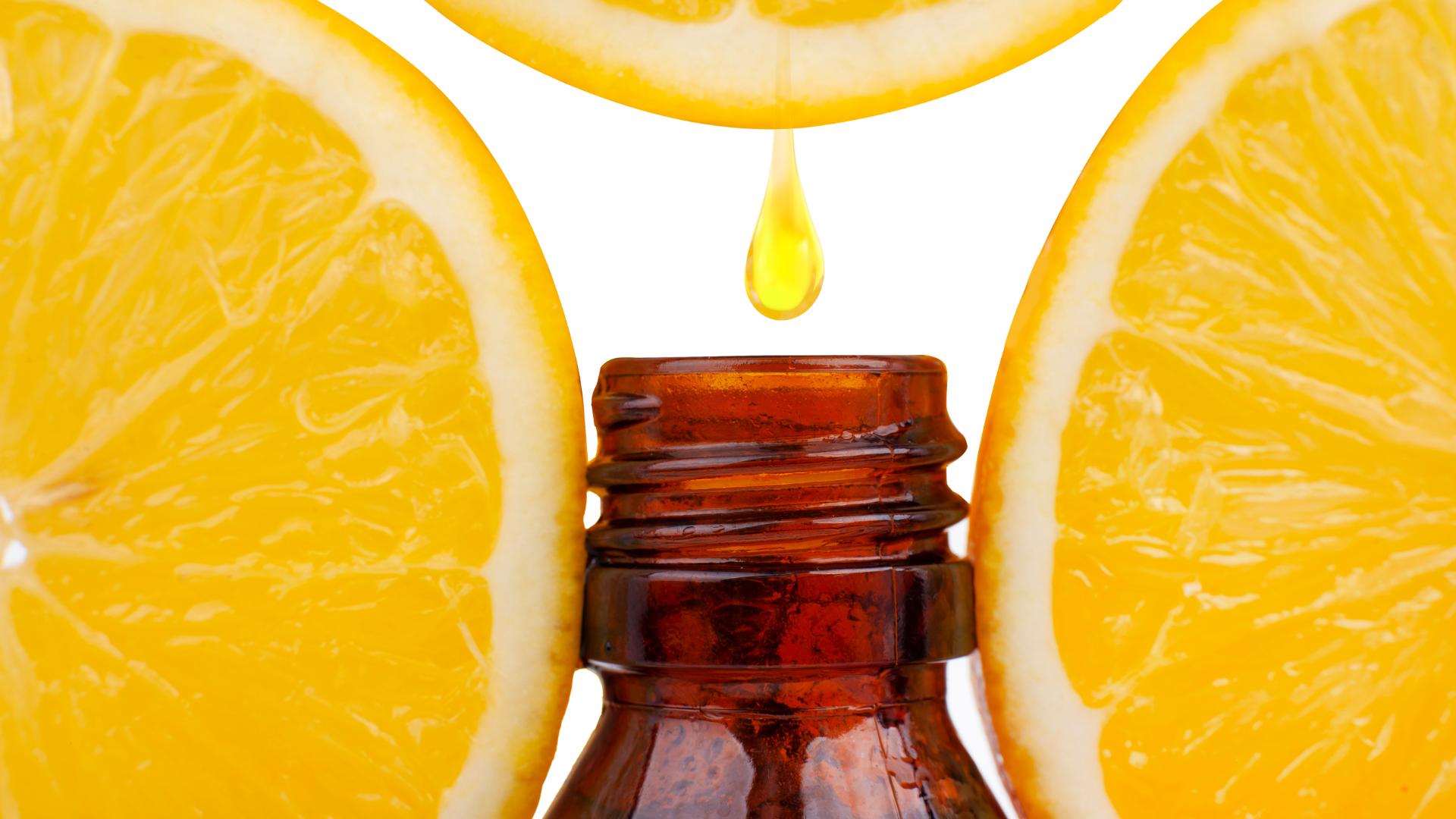
Cold-pressed citrus oils are phototoxic, and this is the safety point that gets skipped most often in beauty content. Cold-pressed lemon peel contains furanocoumarins such as bergapten, which react with UV light on the skin and can produce burning, blistering and long-lasting dark patches from an exposure that would otherwise have been harmless.
The industry limits give you a sense of scale. Guidance from the International Fragrance Association caps bergapten at 0.0015 percent, or 15 parts per million, in products used on skin that sees daylight. Practical dilution guidance for cold-pressed lemon lands around 2 percent for leave-on use, with bergamot far lower again at around 0.4 percent. Steam-distilled and bergapten-free versions exist and behave very differently, so the label matters.
My own rule is blunt because it has to survive an early start: citrus stays in body oils and in the evening. Never on a face that is about to spend a day outdoors, however grey Liverpool looks through the window.
Matching a blend to your skin, without overthinking it
Skin type changes what your carrier should be far more than it changes which essential oil you pick. Get the base right and the rest is fine tuning.
- Dry skin: a richer carrier such as sweet almond or rosehip, with lavender or chamomile at 1 percent. The carrier is doing most of the work here, not the scent.
- Oily and breakout-prone skin: jojoba, which sits closest to the skin’s own sebum in texture, with tea tree kept to spots rather than spread across the whole face.
- Sensitive or easily flushed skin: the shortest blend you can manage. One oil, 1 percent, and a fortnight of watching before you add anything else.
- Combination skin: treat the two zones as two problems. A light jojoba blend through the T-zone and something richer on the cheeks beats one compromise product.
Oils for hair and scalp, and the rosemary study
Scalp is where I think these oils earn their place most easily, because a pre-shampoo treatment is rinsed out and the exposure is short. A tablespoon of coconut or jojoba oil with two or three drops of rosemary oil, massaged in for a few minutes before washing, is a pleasant ritual with a bit of published backing.
The study people cite was published in SKINmed in 2015: 100 people with androgenetic alopecia were randomised to either rosemary oil or 2 percent minoxidil for six months. Neither group had changed significantly at three months. Both showed a significant increase in hair count at six months, with no significant difference between the two groups, and scalp itching reported more often in the minoxidil group.
That is genuinely interesting, and it is also one small trial against the 2 percent strength rather than the 5 percent formulation many people use. Treat it as a reason to try a scalp massage, not as a reason to stop a treatment your doctor has prescribed.
The five things I never do
- Never apply an essential oil neat, including tea tree, including on a single spot.
- Never skip the 48-hour patch test on a new oil or a new brand of the same oil.
- Never use citrus blends on skin that will see daylight the same day.
- Never keep a bottle past a couple of years. Oxidised oil is more sensitising than fresh, and you can usually smell the difference.
- Never use them near the eyes, on broken skin, or during pregnancy without asking a pharmacist or midwife first.
If you want a gentler way in, mixing a single drop into a mask you are already making is a low-risk experiment, and I have a whole set of those in my notes on face masks matched to different skin types.
What people ask me while I’m working
Can I add essential oils straight to my moisturiser?
You can, but you lose control of the dose. A pump of moisturiser is a smaller volume than most people assume, so a single drop can land well above 2 percent. If you want to do it, decant a small amount into a separate pot and blend it there.
Are essential oils safe during pregnancy?
Some are commonly advised against and guidance varies by oil and trimester, so this is a question for a midwife or pharmacist rather than a blog. It is the one area where I refuse to give a general answer, because the honest one is that it depends on the specific oil.
Does a more expensive bottle work better on skin?
Price tracks purity and harvest more than performance. What matters for your skin is the botanical name on the label, the extraction method for citrus oils, and how long the bottle has been open. A cheap fresh bottle beats an expensive three-year-old one.
My blend stung slightly at first, is that normal?
No. Warmth for a few seconds can happen, but stinging that persists means the dilution is too high or your skin does not tolerate that oil. Wash it off with a plain carrier oil rather than water, since these are oil soluble, and drop the concentration or the oil entirely.
This is general information based on my work as a makeup artist, not medical advice. For persistent acne, eczema, a reaction that spreads, or anything involving prescribed treatment, speak to your GP or a dermatologist.
Sources: Panahi et al., rosemary oil versus minoxidil 2% randomised comparative trial, SKINmed, 2015; Bassett et al., comparative study of tea tree oil versus benzoyl peroxide in acne; International Fragrance Association standard on citrus oils and furocoumarins; European Cosmetic Toiletry and Perfumery Association recommendation on tea tree oil in cosmetic products.
Which oil earned a permanent spot in your routine?
I am always curious which blends people stick with once the novelty wears off, so tell me what stayed and what went in the bin.