
The number on the label is the least useful piece of information in the whole changing room. I learned that watching stylists work on shoots, pulling three sizes of the same jean off the rail because they already knew two of them would go straight back. Denim sizing is not a standard, it is a suggestion, and once you stop taking it personally the whole thing gets a lot easier.
In Short
- Rise does more for your silhouette than cut, wash or size.
- Sizing varies between brands and even between styles from the same brand, so take three sizes in with you.
- Balance is the goal: widen where you are narrow, keep it clean where you are already full.
- Dark, plain denim reads as sleeker; fading and whiskering pull the eye to wherever they sit.
Work out your proportions before you work out your size
Your body shape is simply the relationship between your shoulders, waist and hips, and it is the only measurement that predicts how a jean will hang. Five descriptions cover most people, and they overlap more than any diagram admits.
A rectangle shape has shoulders, waist and hips of roughly the same width. A triangle, or pear, is wider at the hip than at the shoulder. An inverted triangle, sometimes called an apple, is broader across the shoulders with narrower hips. An hourglass has shoulders and hips close in width with a clearly defined waist. A round shape carries more width through the middle than at the shoulder or hip.
None of this is a verdict on anybody. It is a shortcut for predicting where fabric will pull and where it will hang loose, which is all a fitting is ever about.
Which cut to reach for first
Pick the cut that balances your widest and narrowest points, then adjust from there. The table below is where I would start rather than where I would insist you finish.
| Shape | Start with | Why it works |
|---|---|---|
| Rectangle | High rise, straight leg | The high waistband creates definition where there is little, and the straight leg keeps the line long |
| Triangle or pear | Mid to high rise, wide leg or boot cut | Volume below the knee balances a fuller hip instead of fighting it |
| Inverted triangle or apple | Low rise, straight leg | Sits on the hip and adds a little width low down, evening out broader shoulders |
| Hourglass | High waisted, skinny or slim | Follows an existing waist-to-hip curve rather than flattening it |
| Round | Mid rise, wide leg | The mid rise avoids pressure at the waistline and the wide leg keeps the whole line clean |
Read those as opening moves. Plenty of pear shapes look brilliant in a slim jean with a longer top, and plenty of hourglass figures never wear skinny denim at all. The point of knowing your proportions is to shorten the pile you try on, not to close down options.
The five-minute fitting room routine
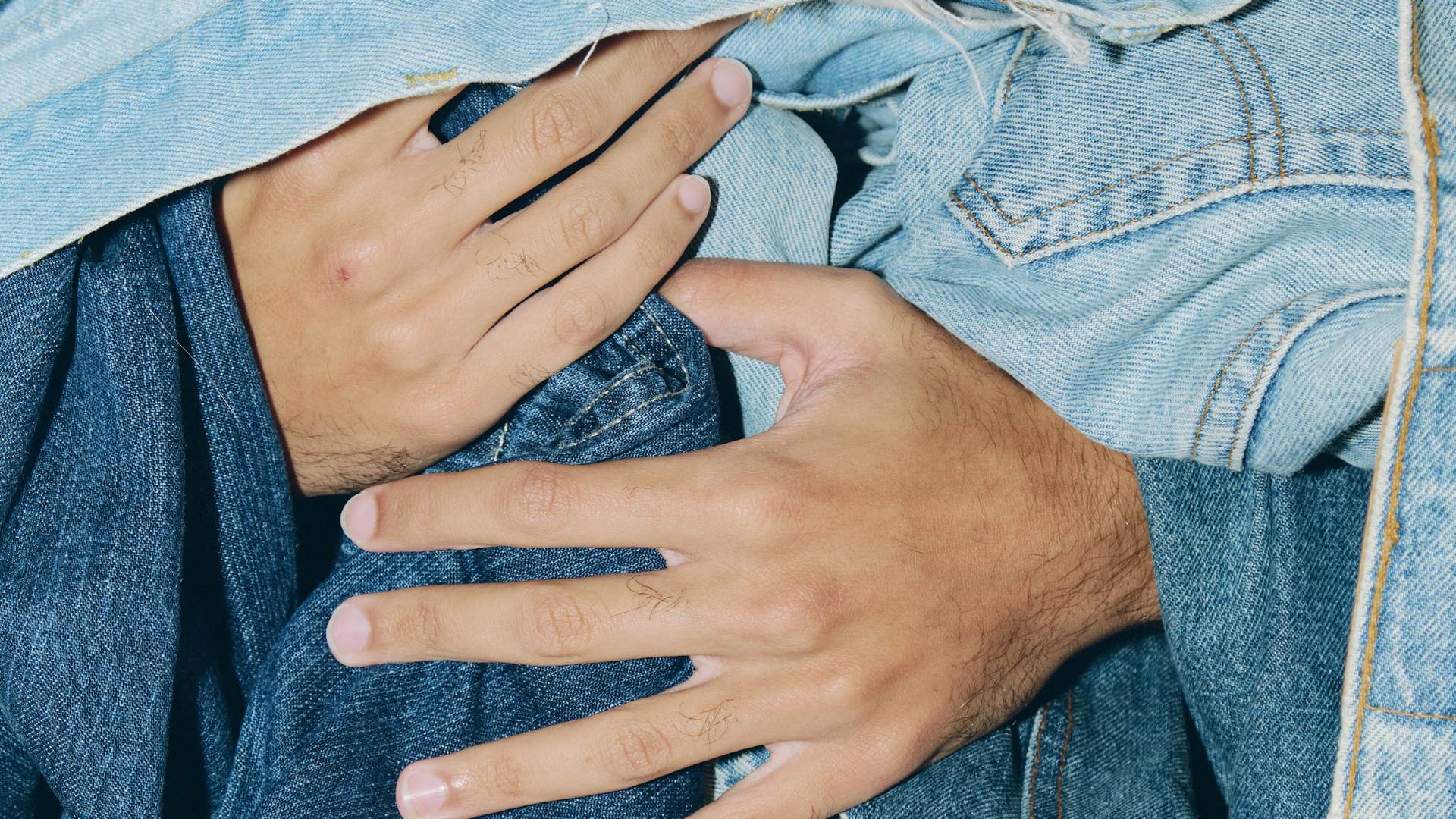
Fit is decided by what the denim does when you move, not by how it looks standing still under a spotlight. Run through these in order, in this order, every time.
- Sit down. If the waistband digs in or gapes at the back the moment you fold, the rise is wrong for you and nothing else matters.
- Squat. Cheap stretch denim goes baggy at the knee here and never fully recovers.
- Check the thigh. You want contact without pull lines radiating from the crotch seam.
- Look at the back pockets. Placement and spacing change the whole read of a jean, and no alteration fixes them.
- Decide the length last. Ankle bone for a classic line, deliberately shorter for a cropped look, and remember a hem is the one thing a tailor can sort cheaply.
Take three sizes into the room with you and refuse to feel anything about which one wins. Brands cut to different blocks, and even within one label a straight leg and a skinny will often not match. The whole exercise is about finding the pair that fits, not the number you expected.
What the wash is doing to the shape
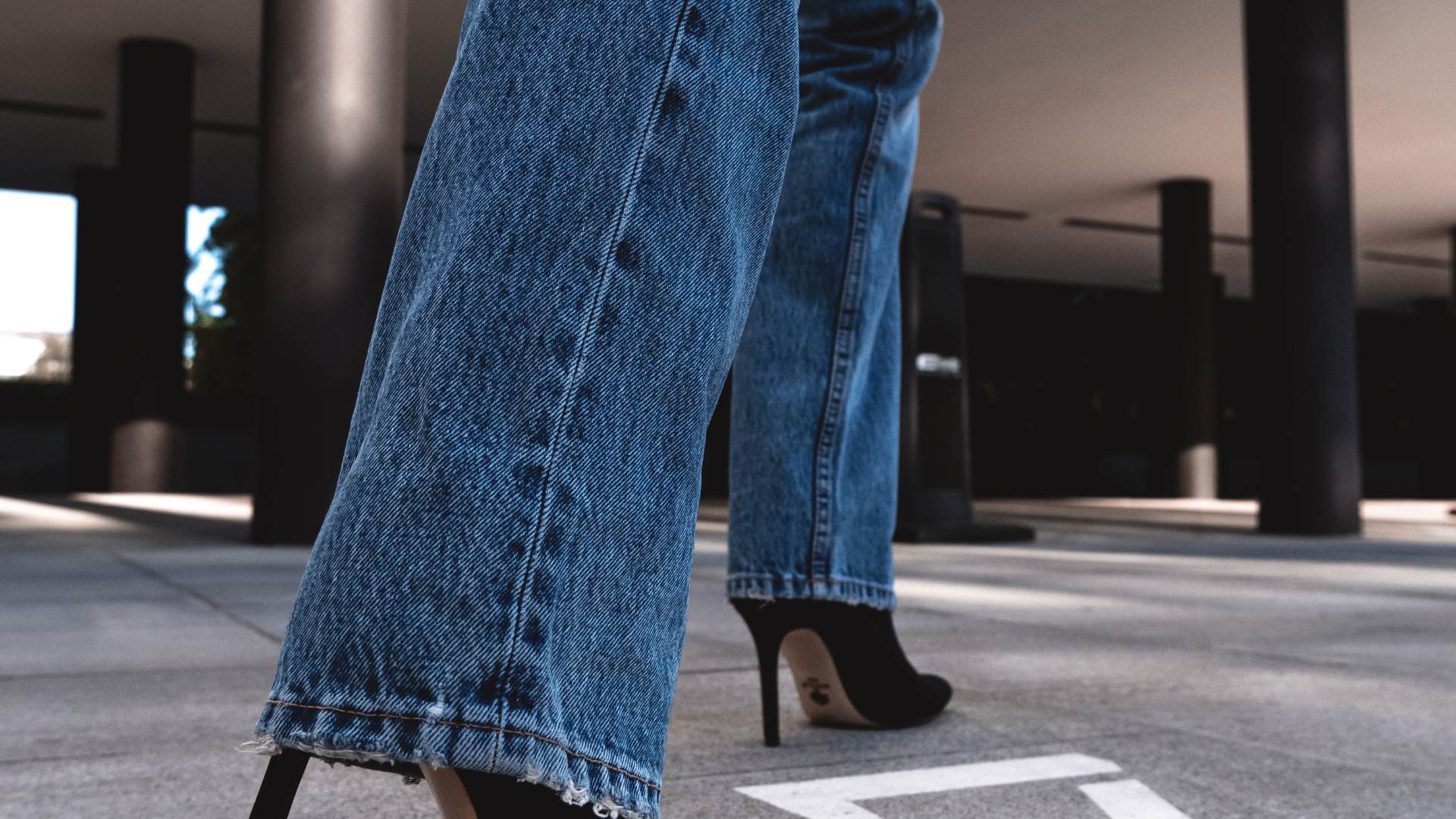
Wash and surface detail work exactly like highlight and shadow on a face, which is the bit of my day job that transfers cleanly to denim. Light areas come forward, dark areas recede. That is the whole principle.
So a pale wash with heavy whiskering across the hips will pull the eye there, and a dark, plain indigo will read longer and sleeker. Neither is better. It depends entirely on where you want attention. If you like a fuller thigh, a lighter wash through the leg is a feature rather than a problem.
Rigid denim holds a shape and softens to you over months. Stretch denim is comfortable immediately and gives a little more with each wear, which is why a stretch pair that feels perfect in the shop can feel loose by the evening. Buy rigid slightly snug, buy stretch to fit exactly.
Once you have a pair that genuinely works, the sensible move is to build outwards from it rather than keep hunting. That is really what building a capsule wardrobe around a few essentials means in practice: one denim shape you trust, repeated, instead of six near-misses in a drawer.
Three things people ask me in the changing room
How do I work out my body type properly?
Measure your bust, waist and hips and compare the three numbers rather than judging by eye. Whichever is widest, and by how much, tells you where you need room and where you want definition, which is exactly the information a cut recommendation is based on.
My waist and hips need different sizes, what now?
Buy for the larger measurement, which is almost always the hip, and take the waistband in. That alteration is quick and inexpensive at most tailors, whereas letting out a seam that was cut too small is often not possible at all.
Are skinny jeans still worth owning?
Yes, if they suit you. Denim cuts move in and out of fashion constantly, and a jean that fits you properly and that you feel good in will outlast whichever silhouette is currently on every rail. Comfort and confidence hold their value better than trends do.
What is your holy grail pair?
Half the useful denim advice I have ever picked up came from other people, so tell me which brand finally cracked it for you in the comments.