
A client in her fifties once told me she had spent about four hundred pounds that year on anti-ageing products and still could not go outside without squinting, because she did not own a sunscreen. That conversation stuck with me. It is a fairly precise illustration of how the money and the evidence have come apart in this corner of beauty.
In Short
- The single largest driver of visible facial ageing is cumulative UV exposure, not the products you skipped.
- Retinoids carry the strongest published evidence of any topical ingredient family. Everything else is a distant second.
- Expensive does not mean effective, and natural does not mean gentle. Both assumptions cost people money.
- Prevention beats correction, which is unhelpful advice at forty and excellent advice at twenty-five.
- 1 Start with what actually moves the needle
- 2 Myth: skin ageing is mostly down to genetics
- 3 Myth: the more expensive the cream, the better it works
- 4 Myth: oily skin ages more slowly
- 5 Myth: natural and organic ingredients are the gentle option
- 6 Myth: sunscreen is a summer product, and only for pale skin
- 7 Myth: you should wait for lines before starting
- 8 Myth: if it is working, you will see it in a fortnight
Start with what actually moves the needle
Before taking apart the myths, it is worth being clear about the short list. If you did only these things and ignored every other product claim, you would be doing better than most well-stocked bathroom cabinets.
- Sun protection, daily. Official UK advice is at least SPF 30 with a high UVA rating, applied generously and reapplied through the day when you are outdoors.
- A retinoid, consistently. Two or three nights a week, built up slowly, kept up for months rather than weeks.
- Not smoking. Nothing you apply topically competes with this one.
- A moisturiser you will actually use. It does not rebuild anything, but hydrated skin genuinely looks smoother, and that is a real cosmetic effect rather than a promise.
Everything past that list is optional. Some of it is pleasant, some of it is well formulated, and almost none of it will change the trajectory of your skin the way the first two items can.
Myth: skin ageing is mostly down to genetics
Mostly untrue, at least for what shows on the face. Dermatologists separate intrinsic ageing, the chronological process nobody escapes, from extrinsic ageing driven by sun, smoking, pollution and sleep. The visible signs people mind about, meaning lines, uneven pigment and loss of firmness, sit heavily on the extrinsic side.
The figure often quoted comes from a 2013 study in Clinical, Cosmetic and Investigational Dermatology, which compared sun-seeking and sun-avoiding women and attributed around 80 per cent of visible facial ageing signs to UV exposure. That was 298 white women aged 30 to 78 in southern France, so treat it as a strong signal about a population rather than a precise prediction for any one face. It still reframes the priority list entirely.
Myth: the more expensive the cream, the better it works
Price and evidence are not related. What a formula contains, at what concentration, in a base that keeps it stable, is what determines whether anything happens. A great deal of the cost of a luxury moisturiser sits in the jar, the box and the advertising.
Retinoids are the clearest example. The strongest clinical evidence in this whole category attaches to prescription tretinoin, which in the UK is a pharmacy item rather than a luxury purchase, and dermatology reviews still use it as the benchmark that over-the-counter retinols are measured against. The best-supported ingredient in anti-ageing skincare is not the most expensive thing in the shop.
Myth: oily skin ages more slowly
Oil production and ageing are separate processes. Sebum keeps the surface comfortable and can make fine lines less obvious in certain light, which is where the belief comes from. It does nothing about collagen, elastin or accumulated pigment change.
What I see in practice is that people with oily skin often avoid sunscreen because of texture, and that avoidance does far more damage over a decade than any advantage the oil ever gave them. If greasiness is the barrier, the answer is a fluid or gel formula rather than skipping the step.
Myth: natural and organic ingredients are the gentle option
Plant origin says nothing about how skin will react. Essential oils, citrus extracts and some botanical actives are well-known triggers of contact irritation, while plenty of laboratory-made ingredients are chosen precisely because they are inert and predictable.
Patch test anything new on a discreet patch of skin for a few days before putting it across your whole face, regardless of where the ingredients came from. That advice applies as much to a fashionable oil blend as to an acid.
Myth: sunscreen is a summer product, and only for pale skin
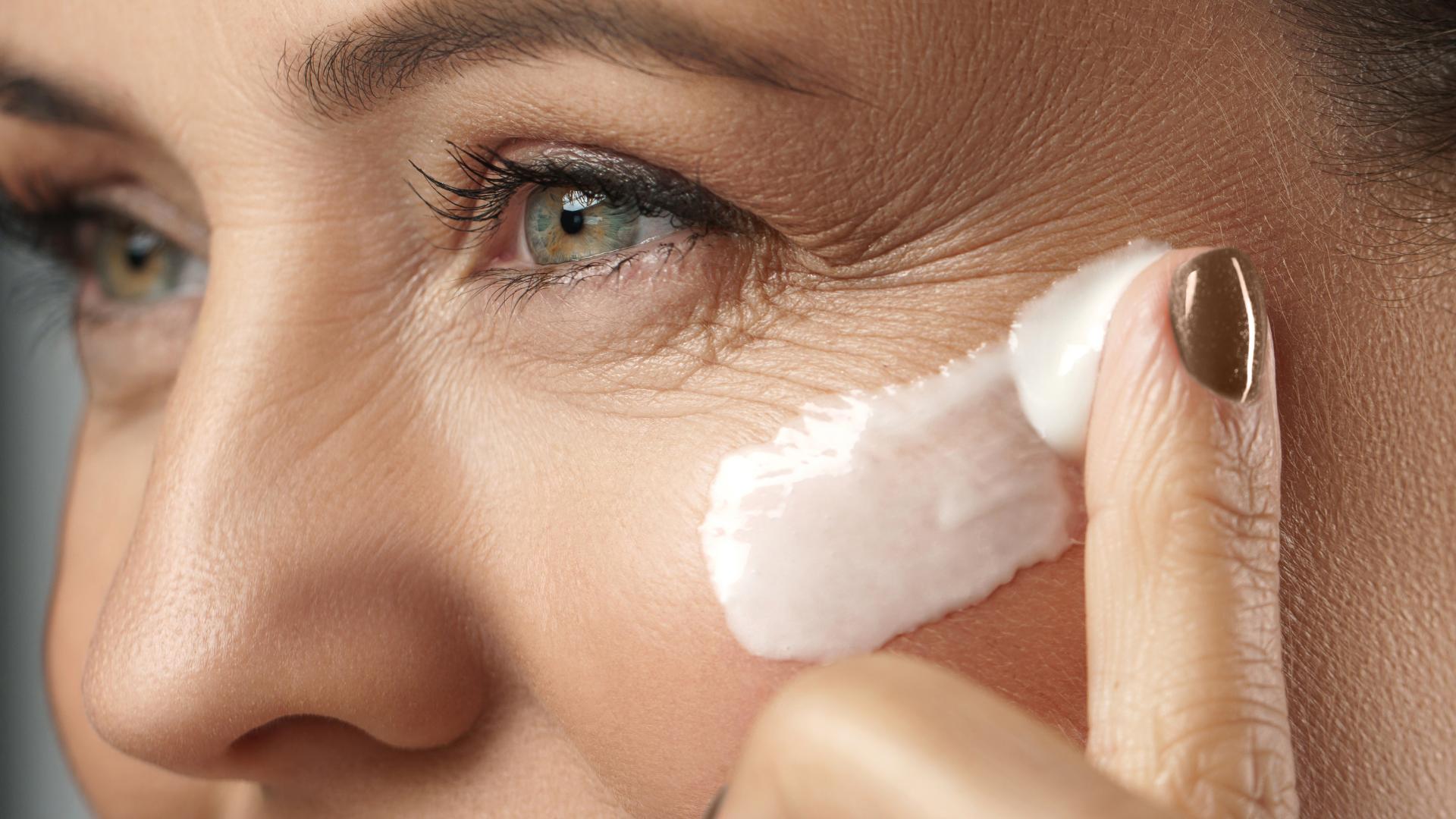
Wrong on both counts. UVA passes through cloud and through window glass, which is why a grey day in Liverpool is not a day off, and it is UVA that is associated with the deeper changes behind photoageing rather than with burning.
Melanin offers real but partial protection, so deeper skin tones burn less readily and still accumulate sun damage and pigmentation changes. Every skin tone benefits from protection. I go through the practical side of choosing and applying one in my full guide to sun protection.
Myth: you should wait for lines before starting
By the time a line is fixed in place, you are correcting rather than preventing, and correcting is much harder. That is not an argument for putting a twenty-year-old on retinoids. It is an argument for the boring habit of daily sun protection starting as early as you can be bothered.
The flip side is equally true and rarely said in adverts: nothing on a shop shelf reverses structural ageing. Topical products can soften texture, even out pigment and hydrate, and those changes are visible and worth having. They are not the same as turning the clock back, and any product promising that is telling you something the regulations do not allow it to substantiate.
Myth: if it is working, you will see it in a fortnight
Almost nothing in this category works on a two-week timescale. Hydration shows up fast because it is a surface effect. Changes to texture and pigment from a retinoid are usually assessed over three to six months of consistent use, and the first few weeks often look worse rather than better while skin adjusts.
That mismatch between expectation and biology is why so many half-used bottles end up at the back of a cupboard. Give a routine one honest season before judging it, and change one thing at a time so you can tell what did the work.
This article is general information from my perspective as a makeup artist, not medical advice. For a persistent skin concern, a changing mole, or before starting a prescription retinoid, speak to your GP or a dermatologist.
Which anti-ageing claim finally lost you?
We have all bought the jar with the beautiful lid at least once. Tell me which promise you stopped believing, and what you use instead.