
Every wellness trend that promises to undo something modern deserves the same question: what did the research actually measure? Barefoot running is the best test case I know, because the science behind it is real, widely quoted, and says something narrower than the headlines ever did.
In Short
- Lieberman’s 2010 study in Nature looked at foot strike and collision forces, not injury rates
- Reviews of the evidence find no systematic benefit of barefoot over shod running for injuries
- In a 10-week transition study, half the minimalist group developed bone marrow oedema in the foot
- Vibram settled a US class action in 2014 and agreed to drop its injury-reduction claims
Where the barefoot revolution actually started
It started with a book and a paper. Christopher McDougall’s Born to Run, published in 2009, turned endurance running among the Tarahumara of northern Mexico into a bestseller and an argument: that cushioned shoes had made us worse at the one thing our bodies evolved to do.
A few months later, in January 2010, Daniel Lieberman and colleagues at Harvard published a study in Nature comparing foot strike patterns in habitually barefoot and habitually shod runners. They found that people who grew up running without shoes tend to land on the fore or mid foot rather than the heel, and that this produces a much smaller impact spike at the moment of contact.
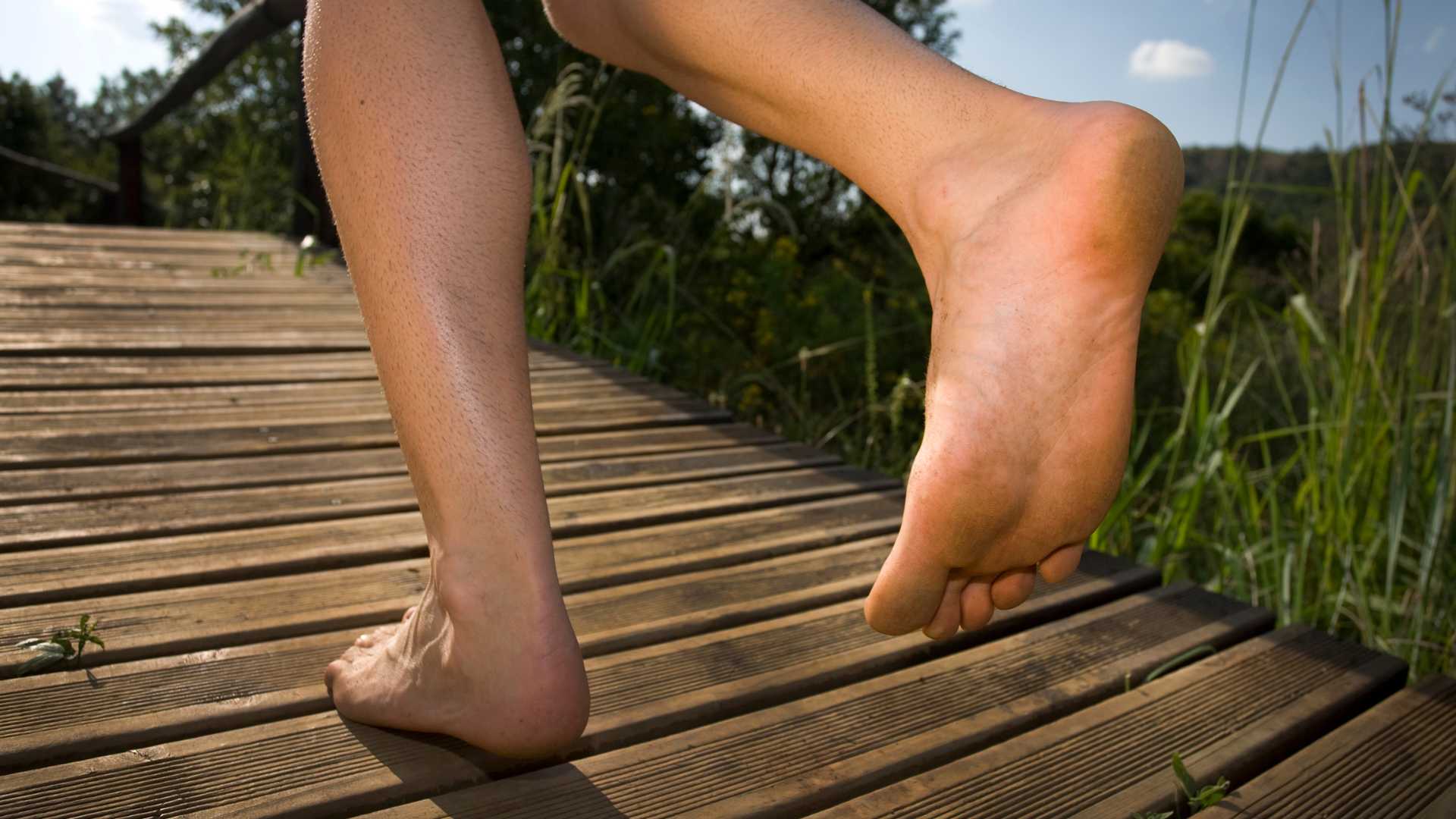
That is a genuinely interesting finding about biomechanics. It is not a finding about injuries, and the authors did not claim it was. The gap between what the paper measured and what the marketing said it meant is the whole story of the last fifteen years.
What the injury evidence says, fifteen years on
It says we still do not know, and that is not a dodge. Systematic reviews comparing barefoot, minimalist and conventional shod running conclude there is no consistent evidence that any one of them produces more or fewer injuries than the others, and they note that the studies available are mostly small and methodologically weak.
The lower impact forces are real. They simply have not been shown to translate into fewer injured runners, partly because injury is driven by training load, sleep, previous injury and how quickly you increase your mileage far more than by what is on your feet.
The transition is where people actually get hurt
There is one thing the research is fairly clear about, and it is a warning. Ridge and colleagues, publishing in Medicine & Science in Sports & Exercise in 2013, followed 36 experienced recreational runners over ten weeks, scanning their feet with MRI before and after. Nineteen gradually moved into Vibram FiveFingers, seventeen stayed in their usual shoes.
Ten of the nineteen in the minimalist group showed increased bone marrow oedema in at least one bone of the foot, against a much lower rate in the control group. Bone marrow oedema is the change that can precede a stress fracture. These were experienced runners following a gradual programme, which is the uncomfortable part.
Your feet adapt, but bone adapts on a timescale of months, and calf muscles and Achilles tendons that have spent thirty years in a raised heel do not lengthen in a fortnight.
The claim that ended up in court
In 2014 Vibram settled a class action in the United States over its marketing of FiveFingers footwear, putting aside a settlement fund of several million dollars and agreeing to stop claiming that the shoes strengthen foot muscles or reduce injury risk. The company admitted no wrongdoing.
I bring it up not to pick on one brand but because it marks the moment the trend’s central promise was formally withdrawn. Anything you read today that still says minimalist shoes prevent injury is quoting a claim its own manufacturer stopped making twelve years ago.
A city pavement is not a savannah
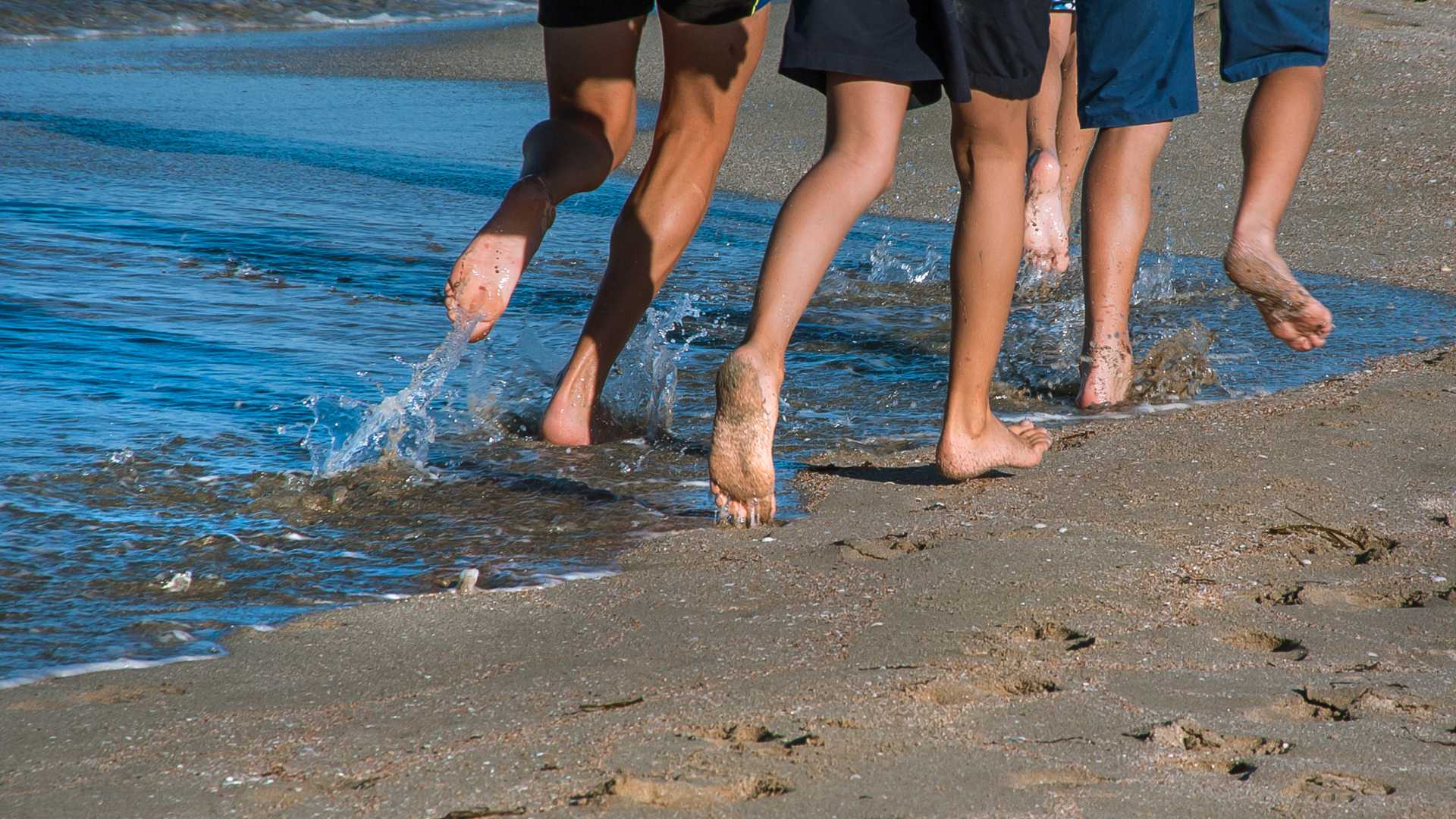
The romantic version of barefoot running involves grass, sand and forest paths. The realistic version, for most of us, involves broken glass, dog mess, hot tarmac in July and freezing pavement in January. Puncture wounds and thermal burns are not exotic risks here, they are the ordinary ones.
Some people should not experiment with this at all. If you have diabetes or any loss of sensation in your feet, going barefoot outdoors is a recognised risk, because an injury you cannot feel is one you will not treat. The same caution applies if you are recovering from a stress fracture, have persistent plantar heel pain, or have been advised to use orthotics. That conversation belongs with a GP or a podiatrist, not a comments section.
If you still want to try it, do it like this
- Start on grass or a running track, never on pavement, and never on a run you have already planned to be long.
- Begin with five to ten minutes at the end of an ordinary run, no more, once or twice a week.
- Build calf, foot and ankle strength separately, with calf raises and single-leg balance work, before adding barefoot distance.
- Add time in single-digit increments over months rather than weeks. The 2013 study’s ten-week programme was already too fast for half its participants.
- Keep your usual shoes for the rest of your mileage. This is an addition, not a replacement.
| Sensation | What to do about it |
|---|---|
| Broad calf and arch soreness for a day or two | Normal adaptation. Rest a day, then continue at the same volume |
| Sharp pain you can point to with one finger on a bone | Stop entirely and get it assessed. This is the pattern of a bone stress injury |
| Pain that worsens as the run goes on | Stop that session. Pain that eases as you warm up is a different signal from pain that builds |
Three honest answers
Is barefoot running better for your feet?
It is different, not better. It loads the calf, Achilles and forefoot more, and the knee slightly less, which may suit some bodies and clearly does not suit others. There is no evidence it produces fewer injuries overall.
Are minimalist shoes the same as barefoot?
Not quite. They protect the sole from glass and temperature while allowing a similar foot strike, which makes them the more sensible urban compromise, but they demand exactly the same slow transition.
So is it a risky trend or a liberating one?
Both, depending on how fast you go about it. As a way of paying attention to how you land and how strong your feet are, it is worth something. As a promise that shoes are the reason you get injured, it has not held up.
This is general information, not medical advice. Anyone with diabetes, nerve damage, a history of stress fracture or ongoing foot pain should speak to a GP or podiatrist before running without shoes.
Sources: Lieberman et al., Foot strike patterns and collision forces in habitually barefoot versus shod runners, Nature 463, 2010; Ridge et al., Foot bone marrow edema after a 10-week transition to minimalist running shoes, Medicine & Science in Sports & Exercise, 2013; systematic reviews of barefoot and minimalist running, 2014 to 2017; reporting on the 2014 Vibram FiveFingers settlement.
Have you tried it, and how did it go?
I would rather hear from people who transitioned badly than from people who loved it. Both stories are useful in the comments.